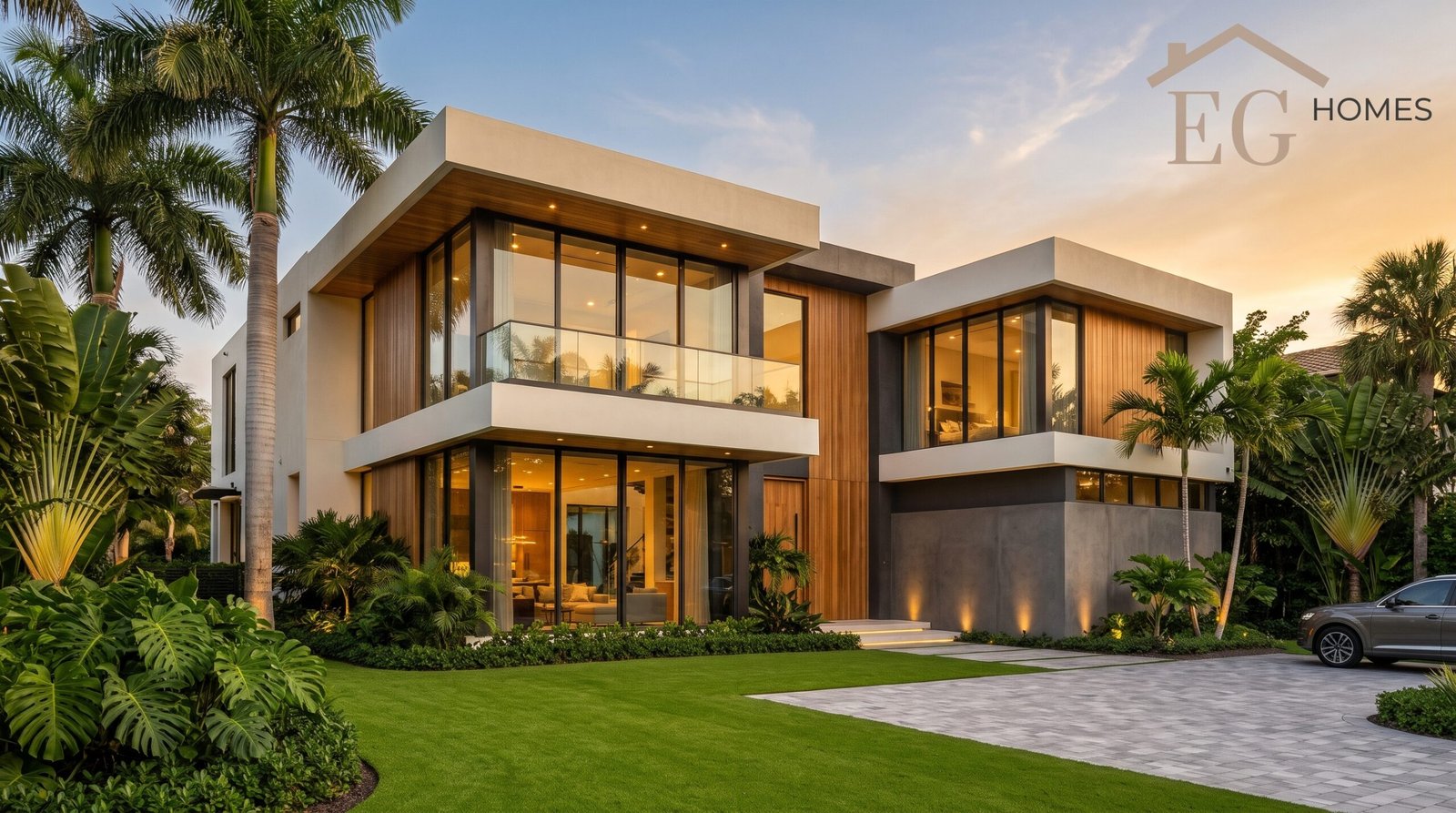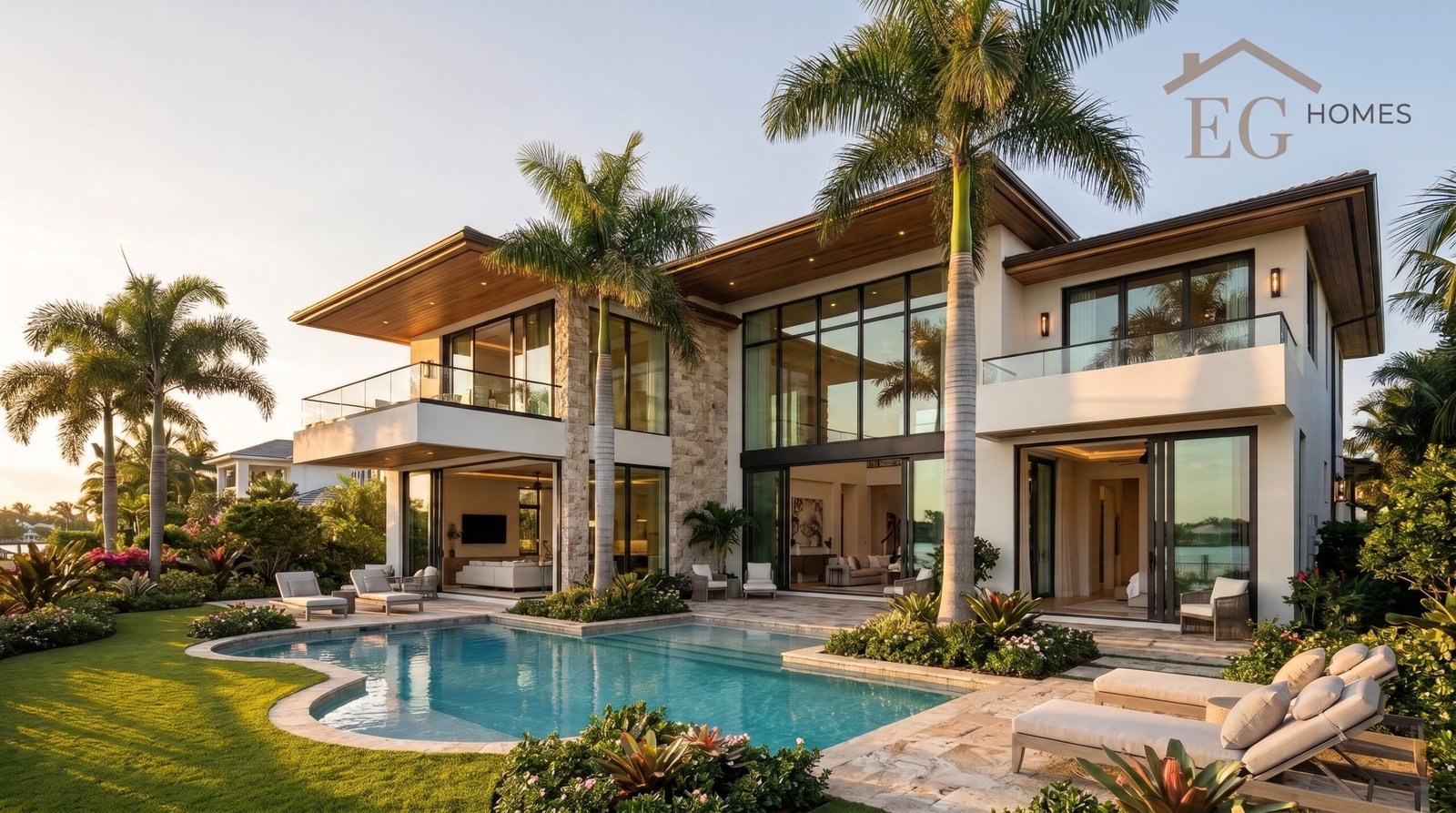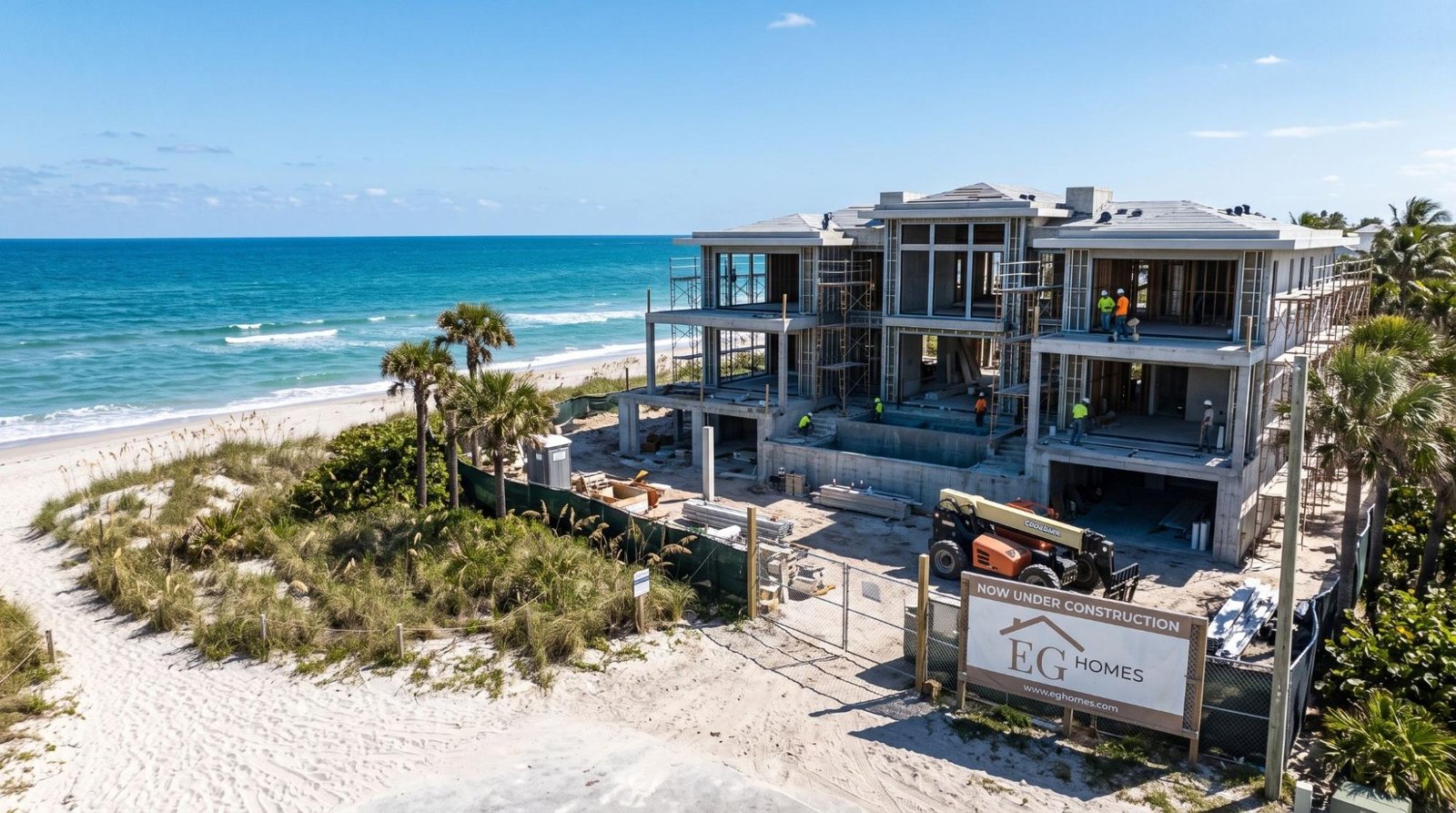
Ocean Ridge is a narrow barrier island town with the Atlantic Ocean on one side and the Intracoastal Waterway on the other. It’s quiet and residential, and the lots along A1A are among the most sought-after building sites in southern Palm Beach County. If you’re planning an oceanfront home here, you aren’t just choosing a floor plan. You’re building on sand, inside a state-regulated coastal zone, on one of the most exposed stretches of Florida’s east coast. That’s why it pays to talk with an experienced custom home builder in Ocean Ridge before you sign on a lot, not after.
This guide covers the state permit that sits on top of local approvals, the flood rules that decide your foundation, and the design choices that keep a beachfront house standing for decades.
Why an Oceanfront Home in Ocean Ridge Is a Different Kind of Build
Most new construction in Palm Beach County happens west of I-95, on flat lots with predictable soil and plenty of room for equipment. Ocean Ridge is the opposite. The town runs south from the Boynton Inlet, with A1A (Ocean Boulevard) tracing the dune line and bridges at Ocean Avenue and Woolbright Road linking it to mainland Boynton Beach. Lots are tight. The road is narrow. And the ocean is right there.
Every lot on the beach side faces forces an inland property never sees. Storm surge and wave action come first. Then there’s the salt spray, which works on metal, paint, and mechanical equipment every day. And underneath it all is a dune system the state actively protects. Together, those forces decide where the house can sit, how deep the foundation goes, and even what kind of screws hold the deck railings together.
People comparing oceanfront homes in Florida usually focus on the view. The bigger difference is the rulebook. A typical oceanfront home in Ocean Ridge must comply with the Town of Ocean Ridge building department, the wind and flood provisions of the Florida Building Code, FEMA flood maps, and the Florida Department of Environmental Protection. Each one has a say, and they don’t always move at the same pace.
That isn’t a reason to avoid building here. It’s a reason to plan the project in the right order.
The Florida Coastal Construction Control Line: The Permit Most Buyers Don’t See Coming
If your lot fronts the beach, part of it, or all of it sits seaward of the Florida coastal construction control line. The CCCL is a line the state has set along its sandy beaches. Construction seaward of that line needs a separate permit from the Florida Department of Environmental Protection, on top of your town building permit.
What the CCCL Actually Regulates
The program exists to keep buildings from damaging the beach and dune system, harming neighboring properties, or blocking public beach access. It also protects nesting sea turtles and native dune plants.
So the review goes well beyond the house itself. State reviewers look at where the structure sits relative to the dune and whether the foundation can handle the storm forces expected that close to the water. They check excavation, fill, and any change to the dune profile. Pools, decks, walkways, and dune crossovers get the same attention, and so does exterior lighting visible from the beach.
Florida’s coastal statutes also generally keep major habitable structures from being placed seaward of the projected 30-year erosion line. On some lots, that line takes a real bite out of the usable depth.
How CCCL Review Fits With Town of Ocean Ridge Permits
The state permit and the town building permit run on separate tracks. Design has to be far enough along for the state to evaluate siting and structure, and the town typically wants that state approval in hand before it issues its own permit. Your architect, engineer, and builder should start the CCCL application early, often while interior selections are still being made.
This is where a lot of Oceanside new construction projects lose time. Someone treats the state permit as a box to check at the end, and the whole schedule slides.
Flood Zones, Pilings and the Foundation Under Oceanside New Construction
FEMA flood maps place much of oceanfront Ocean Ridge in coastal high-hazard zones, usually labeled VE, with Coastal A or AE zones farther back from the beach. The zone your lot falls in largely decides your foundation.
In a VE zone, National Flood Insurance Program rules require an open foundation, usually pilings or columns, so storm waves can pass underneath instead of slamming into a solid wall. The bottom of the lowest horizontal structural member has to sit at or above the base flood elevation. Enclosed space below is limited to parking, building access, and storage, and its walls must break away under wave load without damaging the house above.
That’s a long way from the slab-on-grade foundation under most inland homes. It’s also why the foundation conversation on the coast starts with a geotechnical report. Soil borings tell the engineer how deep the pilings need to go and how much load the site can carry. For a closer look at how that work moves from site prep to inspection, see our guide to the foundation construction process in South Florida.
A raised home changes the design in ways people don’t always expect:
- Your finished floor height drives stair layout, elevator placement, and how the house looks from the street.
- The ground level doesn’t have to feel like a garage. A good entry, covered parking, and storage for beach gear can make it one of the most used parts of the house.
- Flood insurance is rated on how the finished home sits relative to the base flood elevation, so the elevation certificate deserves real attention.
Designing for Wind, Salt and Sea Turtles
Once the foundation is settled, the rest of the design has to handle the coastal environment every day, not just during hurricane season.
Wind and Impact Protection
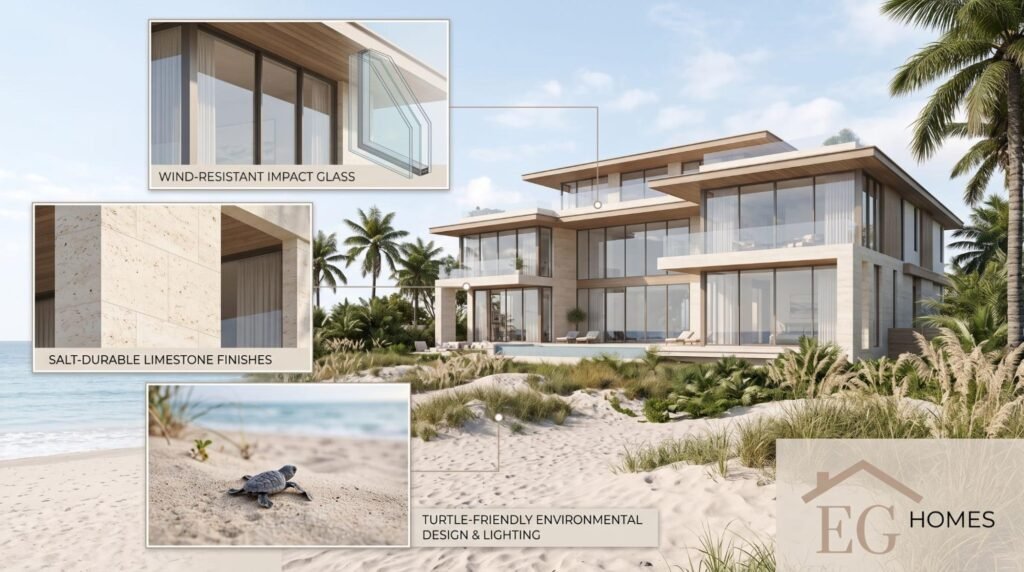
Coastal Palm Beach County sits within Florida’s wind-borne debris region. Windows and doors need impact-rated products or approved shutters, and the structure needs a continuous load path from roof to foundation. Big walls of glass facing the ocean are absolutely possible. They just call for tested products and careful structural detailing around each opening.
Salt Air and Material Choices
Salt doesn’t take a day off. Within a few blocks of the beach, ordinary steel fasteners and standard light fixtures corrode fast. That’s why we specify stainless or coated hardware, choose marine-grade exterior finishes, and ask for corrosion-resistant coils on HVAC equipment. Inside, good ventilation and well-sealed mechanical systems protect cabinetry, flooring, and drywall from the moisture that rides in on every sea breeze.
Turtle-Friendly Lighting
Ocean Ridge’s beach is part of a Palm Beach County shoreline where sea turtles nest each year, roughly from spring through fall. Light visible from the beach can pull hatchlings away from the water, so state CCCL standards and local lighting rules limit what can go on the ocean side of the house. Expect shielded, low-mounted fixtures with amber or red light sources, and often tinted glass on beach-facing windows.
Choosing the Right Oceanfront Lot Before You Buy
A lot of beachfront homes in Florida get planned backward. The buyer falls for a lot, closes, and only then learns how much of it can actually be built on. In Ocean Ridge, where oceanfront parcels are limited, the homework should come first.
Start with the survey. Your builder or engineer should mark where the CCCL and the 30-year erosion projection fall, then confirm the FEMA flood zone and base flood elevation for the parcel. Next comes the dune itself: its condition, any existing walkover, and the vegetation the state will expect you to protect. Town zoning adds setbacks, height limits, and lot coverage rules on top of that. And don’t overlook access. Getting piling rigs and concrete trucks onto a narrow island lot without blocking A1A takes planning.
Some lots that look generous on paper end up with a modest buildable footprint once the setbacks stack up. You want to know that before the money moves. Our new home construction team regularly reviews lots with clients during their search.
What to Look for in Beach House Builders
Plenty of companies call themselves beach house builders. Far fewer have driven pilings near the dune line, managed a CCCL application from start to finish, and solved salt-air details on a finished home. When you sit down with beachfront home builders, a few questions sort things out quickly:
- Have you built in a VE flood zone, and can I see that work?
- Who prepares the state CCCL application, and who answers the reviewer’s comments?
- How do you plan deliveries and staging on a tight street like A1A?
- Does one project manager stay with the job through the certificate of occupancy?
The answers tell you a lot. A Florida home builder who mostly works inland can be excellent at what they do and still be out of their depth on the beach. The same goes for waterfront home builders whose experience is mainly Intracoastal or canal lots, where the wave and wind exposure is very different from direct ocean frontage.
Local experience counts too. A team that works regularly in Ocean Ridge, Gulf Stream, and Highland Beach already knows the town building departments and inspectors. Our guide to choosing a general contractor in Palm Beach County covers the licensing, insurance, and contract questions to ask any home builder in Florida.
Ready to Build Your Oceanfront Home in Ocean Ridge?
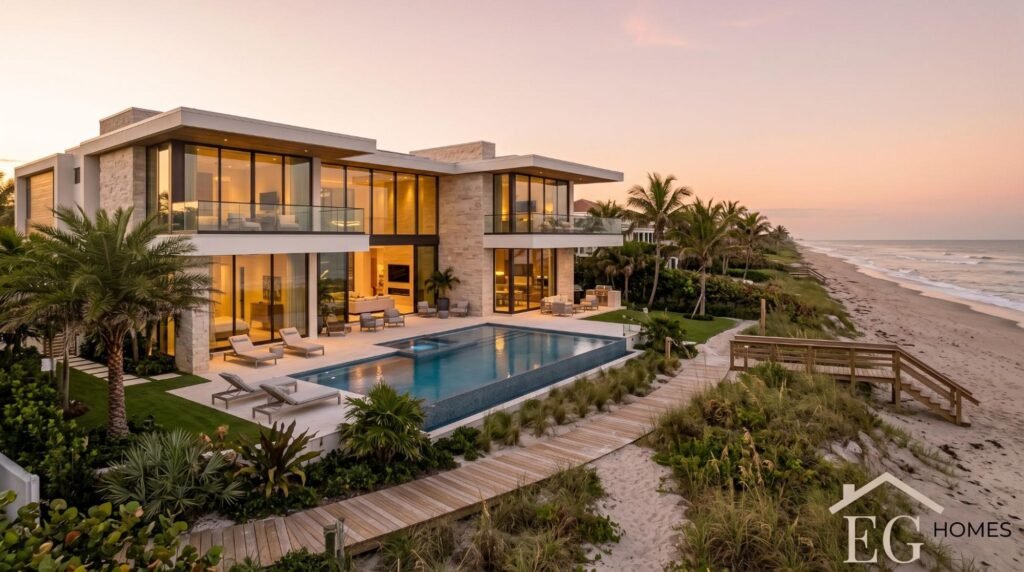
Building on the ocean is one of the most rewarding projects a homeowner can take on. It’s also one of the least forgiving when planning gets rushed. The best oceanfront homes in Florida start with the right lot, a clear permitting plan, and a builder who treats the coastal rules as part of the design.
EG Homes Florida builds custom coastal homes in Ocean Ridge and across southern Palm Beach County. Whether you’re eyeing a lot, already own one, or just want an honest read on what’s possible, schedule a consultation with our team. We’ll walk the property with you and talk through the flood zone, setbacks, and permitting path before you commit to anything.
If you’d like to read up on the state side of the process first, the Florida Department of Environmental Protection keeps a helpful overview of its Coastal Construction Control Line Program, including tools for locating the line along your stretch of beach.
FAQs
What is the Florida Coastal Construction Control Line?
The Florida coastal construction control line is a boundary the state has set along its sandy beaches. Building seaward of it requires a CCCL permit from the Florida Department of Environmental Protection, in addition to local building permits. The rules protect the beach and dune system, nearby properties, public access, and nesting sea turtles.
Can you build a new oceanfront home in Ocean Ridge, FL?
Yes. A new oceanfront home is possible in Ocean Ridge, but it typically needs Town of Ocean Ridge permits, state CCCL approval for work seaward of the line, and compliance with FEMA flood zone rules. How much of a lot you can build on depends on setbacks, erosion projections, and dune conditions, so a site review before purchase is a smart move.
Why are beachfront homes in Florida built on pilings?
Many beachfront homes in Florida sit in VE flood zones, where federal flood rules require an open foundation such as pilings or columns. This lets storm surge and waves pass under the house instead of striking solid walls. The lowest structural member must sit at or above the base flood elevation.
How long does oceanside new construction take in Ocean Ridge?
Timelines depend on lot conditions, engineering, and finish level. Coastal custom homes in Ocean Ridge commonly take about 12 to 20 months from permit to certificate of occupancy. State and local permitting can add time before construction starts, so the CCCL application should begin early in the design phase.
How do I choose an oceanfront home builder in Ocean Ridge?
Look for beach house builders with real VE-zone and CCCL experience, a Florida state license, full insurance, and one project manager for the whole job. Ask to see their past coastal work and how they handle salt-air materials and permits. If you’re ready to talk about your lot, contact EG Homes Florida to schedule a consultation at your Ocean Ridge property.