You’ve walked the property three times. The bones feel tired. Ceilings sit low, the slab’s too close to grade, and every quote for a simple remodel keeps climbing.
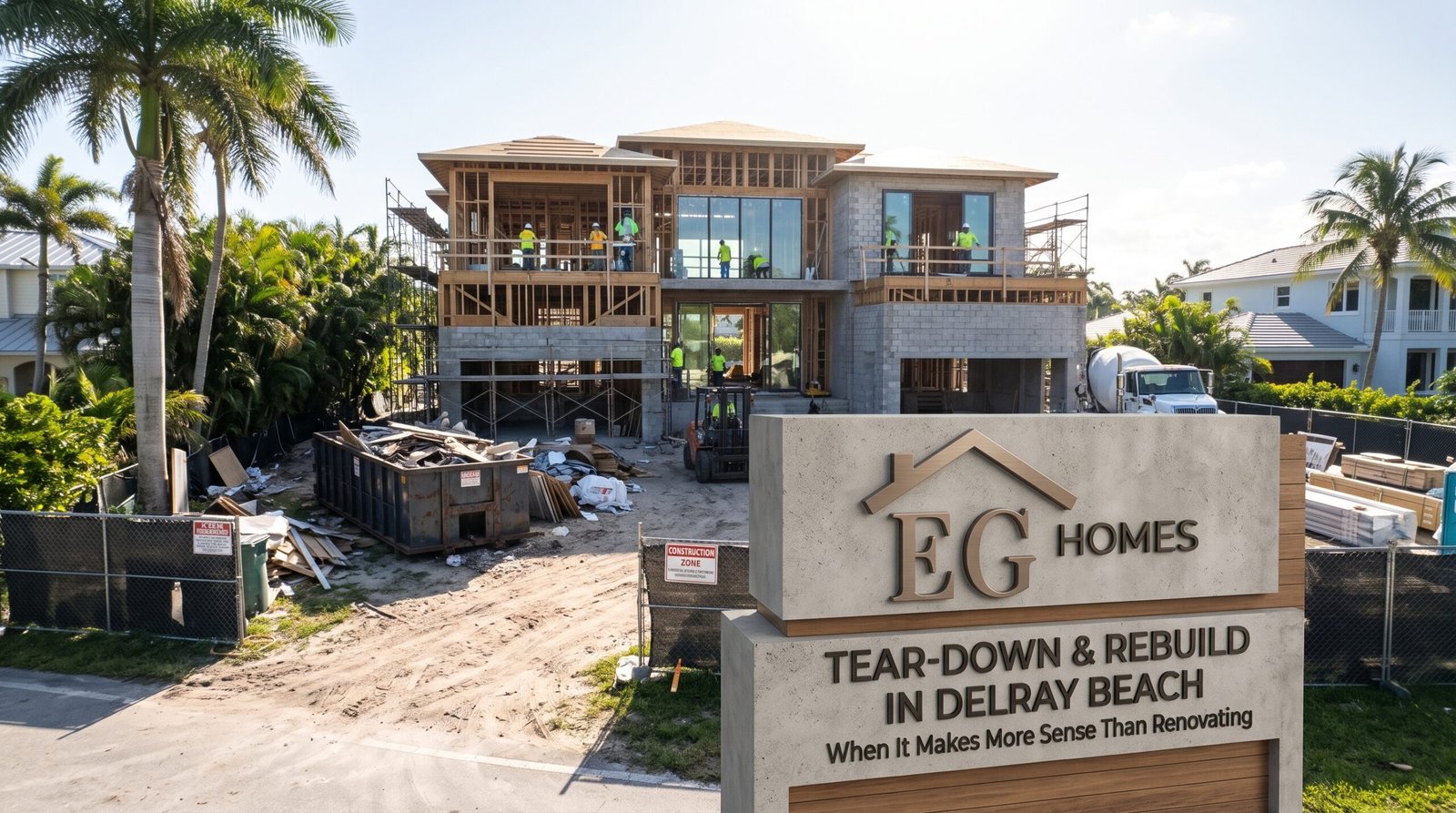
At some point, most Delray Beach homeowners ask the same honest question: is a tear-down and rebuild in Delray Beach actually the smarter play?
The response isn’t a gut feeling. It’s lot value, code, and scope working together. A lot of homes east of I-95 and inland toward Military Trail were built between 1955 and 1985. Most weren’t designed for how we live today or for the code we build to now.
When the gap between what a house is and what it needs to be gets wide enough, renovating costs more than starting over. This guide walks through the real decision triggers, what the process looks like, and when a knockdown rebuild is the right move. If you’re already weighing options, our Delray Beach custom home building team can tell you within one site visit which side of the line your property sits on.
When a Delray Beach Home Is a Tear-Down Candidate
Not every older home needs to go. Plenty of 1970s CBS homes in Tropic Isle, Lake Ida, and Seagate have good structure and remodel beautifully.
The tear-down conversation shows up when more than one of these signals stack up at once:
- Slab elevation sits below current flood requirements. Properties in AE or Coastal A zones often need the finished floor raised. You can’t raise a slab-on-grade home without essentially rebuilding it. The FEMA Flood Map Service Center shows your exact zone.
- Original CBS walls can’t carry what you want to add. A second story, taller ceilings, or wide impact-glass openings often need structural work that approaches new construction.
- Plumbing, electrical, and HVAC are all end-of-life at once. Cast iron drains, cloth-wrapped wiring, and old duct runs don’t age independently. If all three need replacing, the “renovation” is already a gut.
- The floor plan is wrong at the bone. Load-bearing walls in the wrong places, 7’6″ ceilings, chopped-up kitchens. Those aren’t cosmetic fixes.
- The home doesn’t meet current wind-load and impact requirements. The Florida Building Code tightened in 2026. Older homes typically need major upgrades to roof-to-wall connections, openings, and roofing.
If three or more apply, you’re not really choosing between renovation and rebuild anymore. You’re choosing whether to pay renovation prices for something that still lives like an older home, or rebuild and get a home designed around you.
The Real Trade-Off Isn’t Just Price
Most homeowners assume renovation always wins on budget. For cosmetic updates, new kitchen, baths, floors, paint, that’s true.
But once scope creeps into elevation, structural changes, full mechanicals, and impact windows, the gap between a gut renovation and a new build narrows.
Hidden conditions, change orders, and code-triggered upgrades push renovation numbers closer to new-build territory than most owners expect. And the new build gives you a home with decades of useful life ahead of it, not a half-century-old shell dressed in current finishes.
Resale matters too. A well-built new custom home in Lake Ida, Tropic Isle, or Delray Shores resets the comps on the street. A deep renovation rarely does. If you’re staying 15+ years, it matters less. For 5–10 year horizons, it’s a real factor.
Lot Value Is the Deciding Metric
The clean way to think about this: look at what your lot would be worth as cleared, buildable land.
If the land represents roughly half or more of total property value, and the existing home needs major structural or code work, a tear-down almost always pencils out. You’re not throwing away a valuable asset. You’re clearing a lot that’s already carrying most of the value.
East of Federal Highway, lots in 33483 have appreciated to the point where the structure is often worth less than the dirt beneath it. Same pattern along the waterways in Harbour’s Edge and Seagate. Even inland in parts of Lake Ida and Delray Oaks, the land share has climbed enough that scraping an older ranch to build a modern custom home is the clearer path.
West of I-95, the math shifts. Lot values tend to be lower. Well-kept homes in Hamlet, Delray, and Mizner Country Club often justify renovation. The point isn’t to default one way. It’s to look at your specific property.
The Delray Tear-Down Process, Step by Step

A lot of homeowners assume demolition is the hard part. It’s not. Permitting, utility disconnects, and design take the real time:
- Site assessment. A builder walks the property, checks setbacks, flood zone, tree survey, and protected vegetation. Usually a no-cost first visit.
- Design and engineering. Architecture, structural engineering, site plan, and MEP design run in parallel. Typically 10–16 weeks.
- Permit submission. Plans go to the City of Delray Beach Building Division. Palm Beach County plays a role in environmental review or tree removal. Plan on 8–14 weeks of review.
- Demolition permit and utility disconnects. Separate permit. Water, sewer, electric, and gas all need to be disconnected and documented before the house comes down.
- Demolition and site clearing. The actual teardown is usually several days. Debris hauling and slab removal add another week or two.
- New construction. Foundation through final inspection. A mid-size custom home on a cleared Delray lot typically takes 11–16 months from permit issuance to Certificate of Occupancy.
Total timeline: roughly 18–24 months from signed contract to move-in. That sounds long, but it’s comparable to a true whole-home gut once you factor in design, permits, and the discovery work that always slows renovations down.
Common Scenarios Where Rebuild Beats Renovate
A few patterns we see over and over:
The East-of-Federal 1960s ranch. Modest square footage, low ceilings, slab at grade, carport instead of garage. The lot carries most of the value. Renovating means raising, re-roofing, re-plumbing, re-wiring, and re-skinning. You end up paying new-build money for an old-build footprint.
The flood-zone waterfront. FEMA elevation requirements make slab renovations impractical in many coastal areas. Rebuilding on piles or a raised foundation solves the elevation issue and often adds usable square footage.
The second-story addition that keeps growing. You wanted a primary suite upstairs. Now the engineer says existing walls need rebuilding to carry it, the roof has to come off, and the panel can’t handle the load. That’s a rebuild with extra steps.
The investor flip. A clean new build sells faster and at a higher per-foot price than a deep renovation of the same-age home. Holding costs are often offset by the sale-side premium.
Thinking about a tear-down in Delray Beach?
If your property is hitting more than one of the signals above, walk the lot with someone who’s done both. Schedule a free consultation with EG Homes Florida, and we’ll give you a clear-eyed read before you spend money on plans.
What a Rebuild Lets You Do That a Renovation Can’t
A rebuild isn’t just the same house, newer. It gives you design freedom renovations rarely allow:
- Higher ceilings throughout: 10′ to 12′ on the main floor instead of 8′
- A floor plan designed for how you actually live: open sight lines, a true primary wing, pocket sliders for indoor-outdoor flow
- Properly sized impact-rated openings: bigger glass, better views, meeting FBC 2026 wind-load from day one
- A real garage, often oversized: rare in older Delray homes
- Energy efficiency that actually works: spray foam, high-SEER HVAC, modern envelope
- Better insurance rates: newer construction typically scores better on wind mitigation forms
You’re not just getting new finishes. You’re getting a home that lives differently, costs less to operate, and insures for less.
When You Should Renovate Instead
A tear-down isn’t right for every Delray property. Renovate when:
- The structure is sound, and the layout mostly works
- You love the character, pecky cypress ceilings, original terrazzo, details worth preserving
- Lot value is less than about 40% of total property value
- You’re staying forever, and resale isn’t a factor
- Budget doesn’t support a new build and a partial upgrade is enough
Our home additions team handles these exact scenarios. The goal isn’t to push every project toward rebuild. It’s to match the strategy to the property.
How to Decide in Three Questions
Before booking architects or hiring a builder, answer these:
- What is my lot worth as cleared land today? An appraiser call or a chat with a local agent gets you close.
- What would a realistic renovation cost? Not the Pinterest version, the real version, with elevation, structural, mechanicals, and impact windows included.
- What would a new custom home on this lot cost, and what would it be worth finished?
If the renovation number approaches 70% of the new-build number, you’re in rebuild territory. If it’s well under half, renovation is usually smarter. The middle band is where personal factors tip the call.
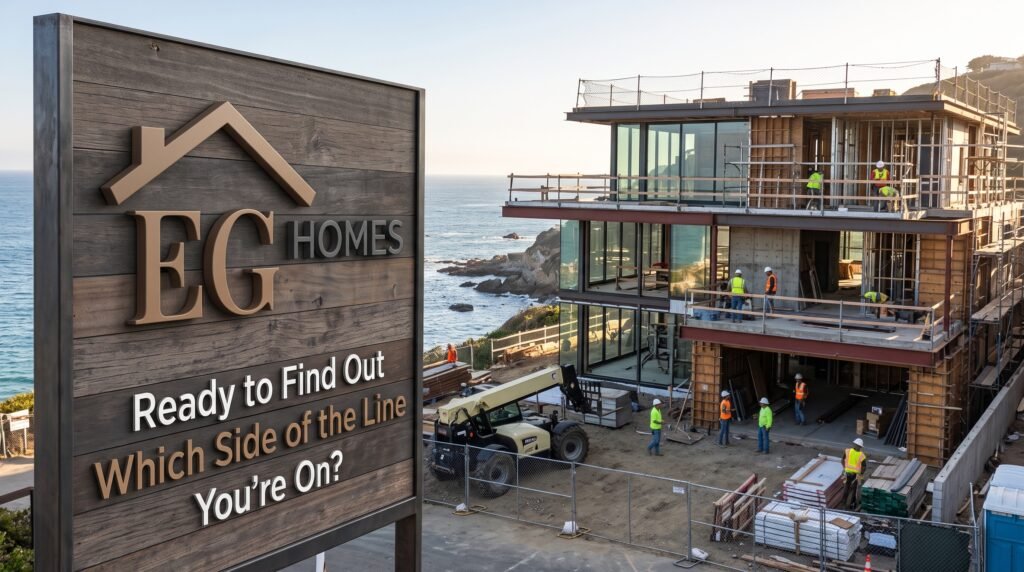
Ready to Find Out Which Side of the Line You’re On?
A tear-down and rebuild in Delray Beach is one of the biggest decisions you’ll make with a property. It deserves more than a quick estimate. At EG Homes Florida, we build across Delray Beach, Boca Raton, Boynton Beach, and the coastal enclaves of Palm Beach County, and we’ve walked this decision with dozens of homeowners. Schedule a free consultation, and we’ll tell you honestly whether your property is a renovation or a rebuild.
FAQs
When should you tear down a house in Delray Beach?
When your lot represents about half or more of the total property value and the home needs major structural, elevation, or code work. Multiple end-of-life systems at once is another strong signal.
Do I need a permit to demolish a house in Delray Beach?
Yes. A demolition permit from the City of Delray Beach is required, along with separate utility disconnect approvals for water, sewer, electric, and gas.
Is it worth rebuilding instead of renovating in Delray Beach?
It depends on scope. Cosmetic remodels always win on cost, but gut renovations involving elevation, structural changes, and full mechanicals often land close to new-build numbers.
How long does a tear-down and rebuild take in Delray Beach?
Plan on roughly 18–24 months from signed contract to move-in, with design and permitting taking about 5–7 months before demolition starts.
How do I know if my Delray Beach property is a good tear-down candidate?
The strongest signals are a lot worth about half or more of the total property value plus an older home needing major structural or code work. Contact EG Homes Florida for a free assessment.