Building a house is a structured process that follows a clear sequence of stages. Each stage has a specific purpose, and skipping or mismanaging any step can affect the quality, safety, and durability of the final home. In South Florida, where weather conditions and building codes are strict, understanding these stages becomes even more important for homeowners.
This guide explains the complete house construction phases step by step so you can clearly understand how a home is built from planning to completion.
1. Pre-Construction Phase
The pre-construction stage is the foundation of the entire project, even before physical work begins.
It starts with planning the home design, finalizing architectural drawings, and deciding the layout according to the homeowner’s needs. During this phase, engineers and designers ensure that the structure meets local building codes and safety standards in South Florida.
Permits are also obtained from local authorities before construction can begin. Without approvals, no legal construction work can proceed.
Budget planning is another critical part of this stage. It includes estimating material costs, labor charges, timelines, and contingency expenses.
2. Site Preparation and Excavation
Once planning is complete, the land is prepared for construction.
The site is cleared of debris, trees, or any existing structures. After clearing, excavation begins to prepare the ground for the foundation.
Soil testing is often conducted in South Florida due to varying ground conditions. This helps determine the strength of the soil and ensures the foundation design is suitable.
The construction layout is then marked on the ground to guide the building process accurately.
3. Foundation Construction Phase
The foundation is one of the most important parts of the house, as it supports the entire structure.
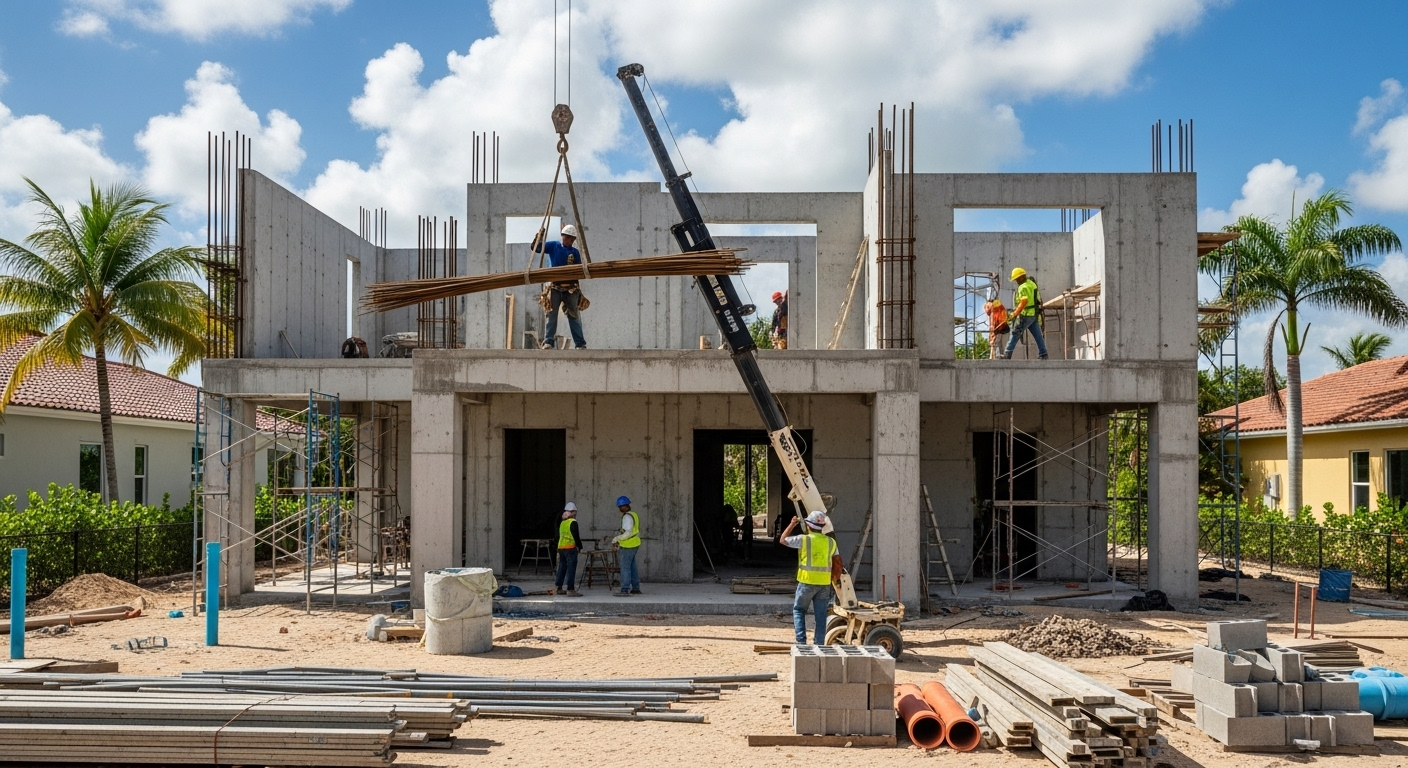
Excavated areas are filled with reinforced concrete footings. Steel bars (rebar) are added to increase strength and stability.
Concrete is then poured and allowed to cure properly to achieve maximum strength.
A properly built foundation ensures that the house remains stable and resistant to soil movement, moisture, and environmental conditions common in Florida.
4. Structural Phase (Framing)
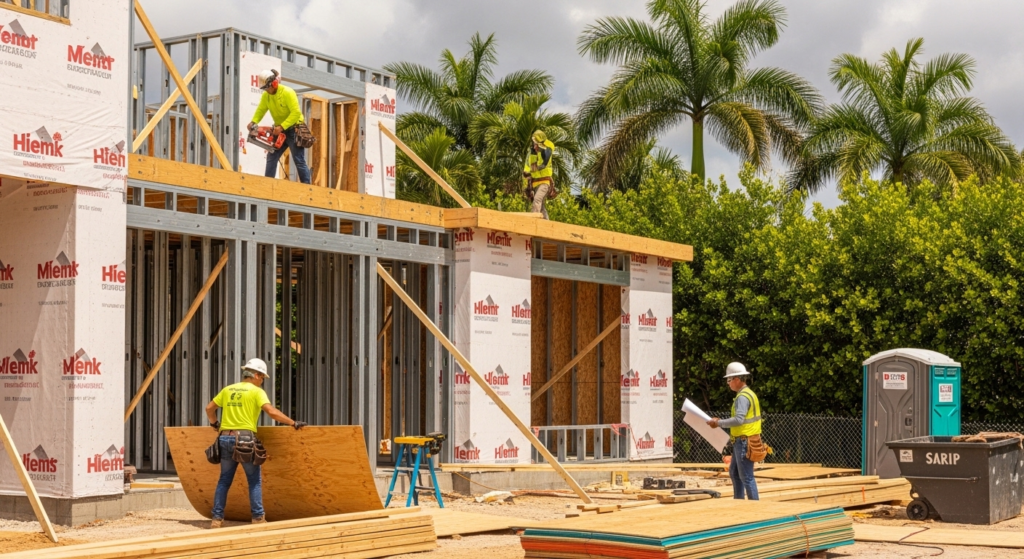 Once the foundation is ready, the framing stage begins.
This phase involves constructing the structural skeleton of the house, including walls, floors, and roof framework. Wood or steel materials are used depending on the design.
At this stage, the house begins to take its actual shape, and room layouts become visible.
Framing is critical because it supports all other construction elements and defines the structure of the home.
5. Plumbing and Electrical Phase (MEP Work)
After the structure is framed, internal systems are installed before walls are closed.
Plumbing systems include water supply lines, drainage pipes, and bathroom/kitchen connections. Electrical work includes wiring, switchboards, and circuit installations.
In modern construction, HVAC systems are also coordinated during this stage.
This phase is known as “rough-in work” because everything is installed inside walls and floors before finishing work begins.
All systems are tested to ensure safety and functionality before moving forward.
6. Roofing Phase
The roofing stage protects the house from weather conditions and completes the upper structure.
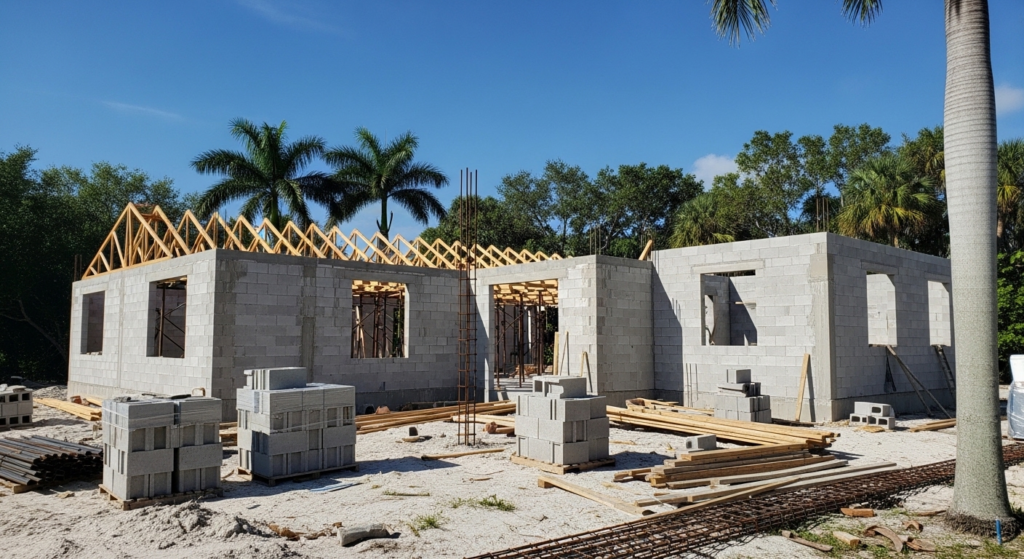
Roof trusses or structural supports are installed first. Then roofing materials such as shingles, tiles, or concrete slabs are applied.
Waterproofing is added to prevent leaks, which is especially important in South Florida’s rainy and humid climate.
Insulation may also be installed to improve energy efficiency and indoor comfort.
7. Interior Finishing Phase
Once the structure is complete, the interior finishing work begins.
Walls are plastered, painted, and smoothed. Flooring is installed using tiles, wood, or other materials.
Doors, windows, cabinets, and fixtures are added during this phase. Electrical fittings and lighting systems are also completed.
This stage transforms the house into a livable and visually complete home.
8. Final Inspection and Quality Control
Before handing over the house, a detailed inspection is conducted.
Every system is checked, including structural integrity, plumbing, electrical safety, and finishing quality.
Any defects or incomplete work are listed in a punch list and corrected by the construction team.
Once everything meets building standards and quality checks, the home is approved for occupancy.
9. Handover Stage
After final approval, the house is officially handed over to the homeowner.
All documentation, warranties, and certifications are provided at this stage. The homeowner receives a fully completed, safe, and ready-to-move-in property.
Conclusion
 Understanding the stages of house construction helps homeowners stay informed and make better decisions throughout the building process. From pre-construction planning to final inspection, each phase plays a vital role in ensuring a strong and durable home.
In South Florida, companies like EG Homes Florida follow a structured and professional approach to deliver high-quality residential construction that meets both design expectations and safety standards.
Need a reliable contractor for your next project? Contact us now and book your free consultation.
FAQs
- What are the main stages of house construction?
The main stages include pre-construction planning, site preparation, foundation work, structural framing, plumbing and electrical installation, roofing, interior finishing, final inspection, and handover. - Why is the pre-construction phase important?
Pre-construction sets the foundation for the entire project. It includes design planning, budgeting, and obtaining permits to ensure the construction process is legal, safe, and properly structured. - What happens during the foundation stage?
During the foundation stage, the ground is excavated, and reinforced concrete is poured with steel bars for strength. This supports the entire structure and ensures long-term stability. - What is included in the framing stage of construction?
The framing stage involves building the structural skeleton of the house, including walls, floors, and roof structure. This stage defines the shape and layout of the home.
5. What is checked during the final inspection of a house?
Final inspection includes checking structural quality, plumbing systems, electrical safety, and finishing work. Any defects are corrected before the home is approved for handover.