Look, if you want to build a custom home in Boynton Beach, you’re already ahead of most people shopping this coast. Here’s what I mean. Boynton gives you the same beaches, the same ocean, the same short drive to PBI as Boca. It just doesn’t charge you Boca money for the dirt underneath. That’s the whole pitch, and it’s why the Boynton Beach custom home builders I know keep staying busy while some of their south-county counterparts fight over the same handful of tired listings.
The city sits right on the Intracoastal, wedged between Delray and Lake Worth, with I-95 running straight through it and the Turnpike a few minutes west. From 33435 down by the beach out to 33472 in the horse-country western communities, there’s basically every kind of lot a builder could ask for. Teardowns. Waterfront rebuilds. Half-acre lots in gated neighborhoods. Land you can actually swing a hammer on without a neighbor filing a complaint the next morning.
So let’s talk about why the numbers work, what a real build costs, and what hurricane-proof actually means once you’re standing on your own slab.
Boynton Is Priced Below Boca. Same Coast Though.
The Palm Beach County coastline is one long ribbon of expensive real estate, but the pricing doesn’t march in a straight line down the map. Boca is the top. Delray is right underneath. Boynton, sharing a fence line with Delray, has always traded at a real discount per square foot. Same sunsets. Cheaper lots.
If you’re building from the ground up, that gap is where you win or lose. Land is the biggest single number on a custom build, bigger than any finish decision you’ll ever agonize over. Lots east of Federal Highway in Boynton still show up at prices that would make a Delray broker laugh. That’s the leverage. Not saving three grand on cabinets. Buying the right piece of ground before someone else does.
Boynton also has more workable inventory than people realize. Ocean Ridge, out on the barrier island, still has real teardown candidates. The neighborhoods behind Congress Avenue and off Hypoluxo Road give you interior lots big enough to actually design around. Head west toward Boynton Beach Boulevard, and you’ve got room for the kind of pool and outdoor kitchen setup you’d never squeeze onto a Delray beach block.
The Buyer Pool Here Is Wider Than People Assume
Part of why new construction in Boynton Beach keeps moving is that the demand isn’t one type of buyer. It’s a stack of them.
You’ve got Northeast and Midwest transplants who priced Palm Beach first, blinked, then figured out they could get a bigger and newer house ten minutes north. You’ve got retirees rolling in from active-adult communities elsewhere in Florida, looking for one-story custom builds close to the hospitals along Congress. And you’ve got professional families working in West Palm or Boca who want good schools without signing up for a three-million-dollar mortgage.
That mix is what protects your resale. A custom home built to the fat part of the demand curve — three to five bedrooms, open plan, pool, impact glass, storage that makes sense, always has someone waiting for it when you decide to sell. The overly personal, ultra-specific builds don’t age nearly as well on the financial side. A decent builder will push back when you’re about to design yourself into a corner. Let them.
Hurricane-Proof Homes Aren’t Optional. They’re Just How We Build.
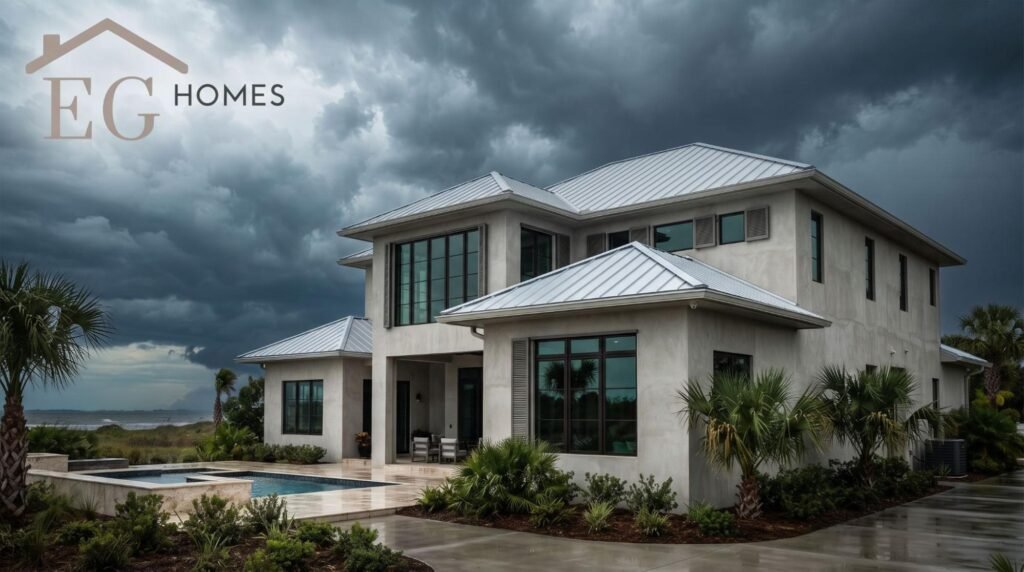
If you’re coming from a state where “storm-ready” meant a sump pump in the basement, reset your thinking. Hurricane-proof homes in South Florida aren’t a luxury upsell somebody’s trying to talk you into. Palm Beach County builds to some of the strictest wind-load standards in the country. The Florida Building Code doesn’t leave much room to cut corners here, and honestly, you wouldn’t want it to.
For a real hurricane-resistant house in Boynton Beach, this is roughly what you’re getting:
- Concrete block on the ground floor, sometimes carried up to the second story on the nicer builds
- Impact-rated windows and doors, where the glass itself is the storm system, not some shutters you’re supposed to remember to put up
- Roof-to-wall connections engineered for 170-plus mph wind if you’re near the coast
- A reinforced garage door, because that’s where older homes fail first, every single time
- A finished floor elevated above the base flood elevation in AE and VE zones
Doing this properly, versus doing the bare minimum, costs somewhere in the 8 to 15 percent range on top of the vertical build. You get it back in insurance savings that stack year after year, a house that holds its value after a bad storm season, and the ability to actually sleep through a Category 2 without taping up windows. The first time your policy renews and you see the wind-mitigation credits, you’ll get it.
What It Really Costs to Build Custom Here
Nobody wants vague answers on price, so here’s a straight one. In the current Palm Beach County market, real custom construction on your own lot runs roughly $350 to $550-plus per square foot just for the vertical build. That’s before land. Before site work. Before the pool. Before the finish packages get fun. Semi-custom inside a master-planned community can come in under that. Fully bespoke waterfront on Ocean Ridge? You can clear $700 a foot without trying hard.
But the per-foot number is a trap if that’s all you look at. What matters is the all-in project cost. Site prep on a Florida infill lot can eat tens of thousands before there’s even a slab down, especially if you’ve got mature trees, drainage issues, or a long utility run. Impact fees and permits through the City of Boynton or the county are their own line. Pool is its own line. Landscape is its own line. A generator big enough to actually keep the house running is its own line.
Any builder worth signing with will hand you a full development budget upfront. Not a per-square-foot estimate scribbled on the back of something. And if your project involves anything beyond the main house, guest quarters, a second-story addition, an in-law suite planned alongside the main build, take a look at how home addition services get folded into a new construction scope. It’s not two separate projects. It’s one.
Where People Are Actually Building Right Now
Not every corner of Boynton is a builder’s market. Here’s where the interesting work is happening:
Ocean Ridge and the strip east of A1A: small lots, high-value teardowns. Longer permit runway because of coastal control line reviews, but what you deliver at the end sells at the top of the market.
Hypoluxo Island and the Manalapan-adjacent parcels: waterfront and near-waterfront. Deep-water dockage on this stretch is an asset that only appreciates.
Federal Highway from Boynton Beach Boulevard south: mixed-use is finally happening here. Walkable pockets. Infill single-family lots you couldn’t have found five years ago.
West of Jog Road and out along Lyons Road (33472, 33473): bigger lots, room for a detached garage or a casita, easier permitting, more house for the money if you don’t need the ocean out your back door.
Every one of these areas has its own quirks. HOA rules. Setback rules. How the county handles drainage on your particular street. This is exactly where hiring locally beats hiring cheap. A builder who’s pulling permits in Palm Beach County every single week already knows which reviewer flags what. That knowledge takes months off your calendar.
Local Experience Beats a Name-Brand Builder. Every Time.
The top luxury home builders in Florida with a statewide footprint can build a beautiful house. Nobody’s arguing that. What they usually can’t deliver is the day-to-day, permit-to-permit, subcontractor-relationship stuff that actually gets a Palm Beach County project across the finish line on schedule.
Boynton has its own inspection culture. The county has its own way of handling plan revisions. The subs who actually show up on time here are a specific list of people, and they don’t necessarily pick up the phone for an out-of-market GC. If you’re comparing a national builder against a real local team, ask both of them to walk you through their last three Boynton or Delray projects. Permit dates. Closeout dates. How many change orders. That’ll tell you everything.
If you want to see how this same permitting framework applies to expansions and additions, this piece on home additions in Boynton Beach covers the setback and zoning logic that governs new construction too.
Ready to Actually Do This?
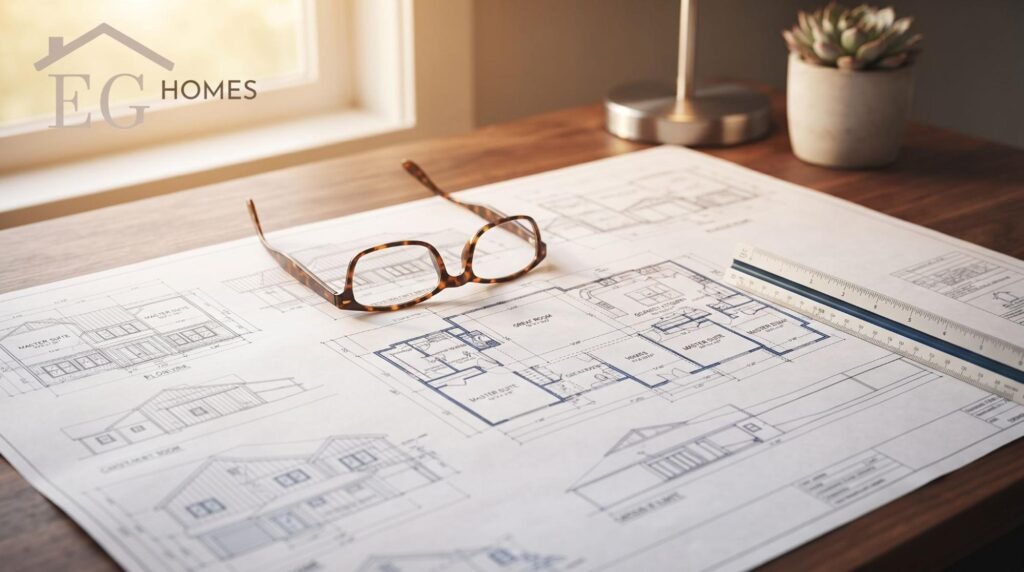
Boynton rewards buyers who move deliberately. Pick the right zip code. Understand the code. Hire local. And whatever you do, don’t chase the lowest per-square-foot bid on your desk. That’s how projects go sideways. If you’re serious about a custom home build in Boynton Beach this year or next, the smartest first move is a real conversation about your lot, your budget, and your timeline. Reach the EG Homes Florida team here to set up an initial consultation and go from there.
And if you’re still on the fence about whether Florida’s building code makes ground-up construction worth the effort, the Florida Building Commission’s public standards are the source of truth on wind-load, impact-glazing, and hurricane-zone rules mentioned throughout this article. Worth an hour of reading before your first design meeting.
FAQ
How much does it cost to build a custom home in Boynton Beach?
Figure roughly $350 to $550-plus per square foot for the vertical construction in today’s Palm Beach County market. True waterfront and full luxury coastal builds push past $700. That number doesn’t include land, site prep, pool, or upper-tier finishes. Always ask for the full development budget, not a per-foot quote. It’s the only number that lets you compare bids honestly.
How long does it take to build a custom home in Florida?
Most custom builds in Palm Beach County take 12 to 18 months from signed contract to certificate of occupancy. Add another 3 to 6 months on the front end for design and permits. Coastal control line reviews, HOA approvals, or heavy site work can push it out. Local builders who actually know the plan reviewers get through faster than out-of-market teams. Every time.
Are hurricane-proof homes worth the extra cost?
In South Florida, yes, without much of an argument. The 8 to 15 percent premium for full impact glass, reinforced roof connections, and concrete block construction pays back through insurance wind-mitigation credits, better resale value, and way lower recovery costs if something bad happens. New builds under the current Florida Building Code already start from a much stronger baseline than anything built before 2002.
What’s the best area of Boynton Beach to build in?
Depends on what you’re after. Ocean Ridge and the barrier island are the play if you want coastal luxury and can wait out the permits. The western communities in 33472 and 33473 give you more lot for the dollar. The Federal Highway corridor is where walkable, mixed-use momentum is strongest at the moment.
How do I actually get started?
Have a conversation before you buy the land, not after. A local builder can walk your prospective lot with you, flag drainage or setback problems that would blow up your budget later, and give you a real development number. Reach out to EG Homes Florida through the contact page and get a no-obligation consultation on the calendar. That’s the whole starting move.