A sunroom addition in Palm Beach County isn’t just glass and a roof. The Florida Building Code sorts every sunroom into one of five categories, from a screened room to a fully air-conditioned extension of your house. Every enclosed wall also has to resist the wind loads mapped for your specific parcel. The category you pick decides how much glass you can use, how the windows must perform, whether you can add air conditioning later, and how the room connects to the rest of the house. If you’re weighing home additions that bring the outdoors in, settle the category first.
This guide covers the many categories, the hurricane requirements that apply here, and the permitting questions to answer before anyone draws a plan.
Table of Contents
- What Counts as a Sunroom Under the Florida Building Code
- The Five Sunroom Categories, Compared
- Hurricane Requirements for a Sunroom Addition in Palm Beach County
- Matching the Category to How You’ll Use the Room
- Permits, Flood Zones, and Code Timing
- Design Details That Hold Up in South Florida
- Sunroom Addition FAQs
- Next Steps for Your Sunroom Project
What Counts as a Sunroom Under the Florida Building Code
Homeowners use sunroom, Florida room, patio enclosure, and screen room interchangeably. The code doesn’t. Section R301.2.1.1.1 of the Florida Building Code, Residential, requires sunrooms to comply with AAMA/NPEA/NSA 2100, the industry specification for sunrooms. That standard splits sunrooms into five categories based mainly on two questions: is the space habitable, and is it heated or cooled?
Those two responses affect everything else. They set the wall and window performance the inspector expects, whether outlets are required, whether the room counts as a conditioned living area, and whether the energy code applies.
Here’s the practical takeaway. When you apply for a permit, the sunroom is identified as a specific category. What you build has to match it, and what you change later has to stay within it.
The Five Sunroom Categories, Compared
The table summarizes how the categories differ under AAMA/NPEA/NSA 2100 as the Florida Building Code applies it. Your designer or engineer will confirm the details against the code edition that governs your permit.
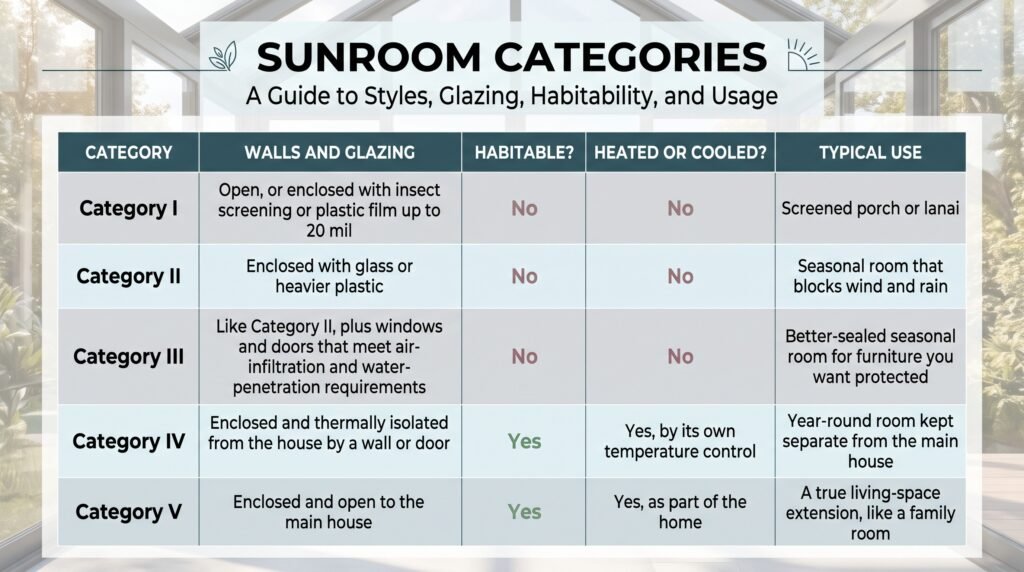
Two details catch people off guard. Outlets are required only in Category IV and V rooms; Categories I through III are exempt. Categories I, II, and III aren’t habitable spaces, so on paper they don’t work as a bedroom, office, or family room, however nice the finishes are.
Hurricane Requirements for a Sunroom Addition in Palm Beach County
This is where a sunroom addition in Palm Beach County differs from the same project in most of the country. A glass room is mostly openings, and every opening is a potential failure point in a storm.
Your parcel sets the design wind speed
The Florida Building Code assigns an ultimate design wind speed based on location and the building’s risk category. Palm Beach County publishes its own wind speed maps and a GIS lookup for each risk category, so your engineer pulls the number for your exact property instead of guessing from a countywide figure. Coastal lots in Delray Beach, Highland Beach, or Ocean Ridge often face different exposure conditions than inland lots west of I-95. That affects frame sizing, connections, and the pressure rating your glass must carry.
The wind-borne debris region means impact protection
The county’s Building Division states that all of unincorporated Palm Beach County lies within the wind-borne debris region. There, glazed openings need impact-resistant products or an approved protection system. For a sunroom, that usually means impact-rated windows and doors with Florida Product Approval (or a Miami-Dade NOA), rated for the design pressures on your plans.
One clarification: Palm Beach County isn’t in the High-Velocity Hurricane Zone, which covers Miami-Dade and Broward. That doesn’t make a sunroom a casual project here. Design pressures near the coast are still demanding.
Enclosing an existing patio roof changes the math
Many sunroom projects start with a covered patio, and it’s tempting to assume you can just add walls under the roof you already have. Sometimes you can. Often you can’t without reinforcement.
An open patio and an enclosed room behave differently in the wind. Once walls go in, the roof, beams, and connections can carry loads they weren’t designed for, and the slab may need footings at the new wall lines. An engineer should check the existing roof framing, the tie-in to the house, and the slab before design moves forward. Skipping that step is a common reason enclosure plans stall in review.
Matching the Category to How You’ll Use the Room
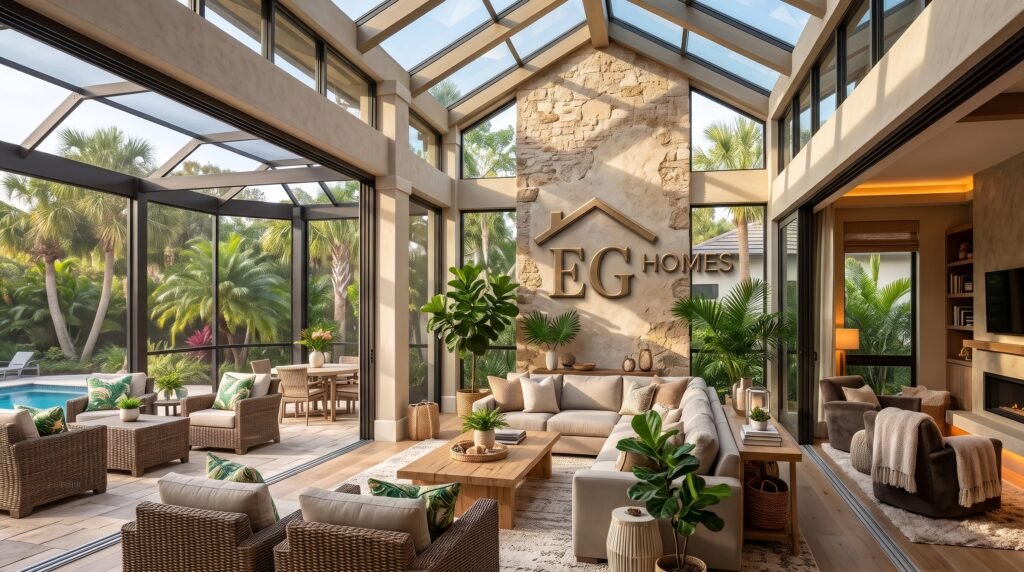
Picking a category is really picking a use. Think about how you’ll spend time in the room in August, not January.
Seasonal rooms: Categories I through III
If you want a shaded, bug-free spot for morning coffee and you’re fine with ceiling fans, a Category I screen room or a Category II or III enclosure may be all you need. These rooms stay outside the home’s conditioned envelope, which keeps the design simpler. Category III adds better protection against wind-driven rain and air leakage. That’s worth having when summer storms push rain sideways most afternoons.
Year-round living space: Categories IV and V
If you’re picturing a reading room, a home office, or an extension of the living room, you’re in Category IV or V territory. Those rooms are habitable and conditioned, so they carry more requirements: outlets, energy code compliance for walls, roof, and glass, and air conditioning sized for a room with a lot of solar gain. Category V opens directly to the house and behaves most like a conventional addition. Our home builder team in Boynton Beach sees this often when families want a sunroom expansion that feels original to the house.
The air-conditioning trap
Here’s the mistake to avoid. A homeowner builds a Category III room, then installs a mini-split a year later. Florida Building Commission staff commentary has noted that adding cooling to a sunroom places it in Category IV or V, and that category’s requirements then apply. Retrofitting outlets, glazing, and insulation later is far more disruptive than designing for them up front. If there’s any chance you’ll want air conditioning, plan for it now.
Mid-article CTA: Not sure which category fits your plans? Schedule a free consultation with EG Homes Florida to talk through your sunroom addition, the code path that matches how you’ll use the room, and what to expect from design through permitting.
Permits, Flood Zones, and Code Timing
Who reviews your plans?
Where you live in the county decides which building department reviews the project. Delray Beach, Boca Raton, Boynton Beach, and the coastal towns run their own building departments. Unincorporated areas go through the Palm Beach County Building Division, which has a specific policy for residential patio and porch enclosures and sunrooms. A contractor who works regularly as a home builder in Delray Beach and nearby towns will know which forms, product approvals, and engineering each office expects.
Expect the permit package to include sealed plans that state the category, wind design data, product approvals for every window and door, and foundation details. Simple maintenance, like re-screening an existing screen room, generally doesn’t need a permit in unincorporated Palm Beach County. Enclosing or converting one does.
Flood zones on the coast
If your home sits in a FEMA flood zone, check the flood map before design starts. Slab-level sunrooms on older coastal homes can raise floor-elevation questions, and towns along A1A may apply coastal construction rules too. Confirm the flood zone and base flood elevation early so floor height doesn’t become a surprise in review.
8th Edition vs. 9th Edition timing
The 9th Edition (2026) of the Florida Building Code takes effect December 31, 2026. Under Florida law, the edition in effect when you apply for a permit generally governs that work for the life of the permit. If you’re applying near the changeover, ask your contractor which edition your plans follow, since product approvals and some wind provisions shift between editions.
Design Details That Hold Up in South Florida
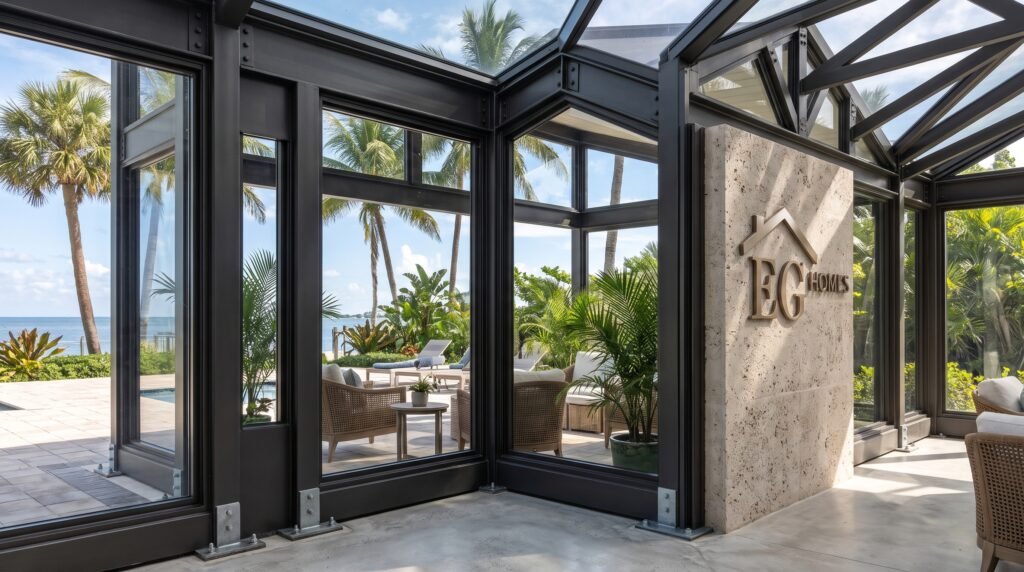
The code sets the minimum. These details decide whether the room still looks and works right ten years from now.
- Frame material. Aluminum framing is common for Category I through III rooms. Conditioned Category V rooms are often built like the rest of the house, with block or wood-frame walls and large impact window and door units.
- Roof tie-in. Where a sunroom roof meets the existing roofline is a frequent leak point. Flashing, slope, and gutter size matter in a climate where summer storms dump a lot of water fast.
- Glass selection. Low-E, tinted, or laminated impact glass cuts heat gain and glare. In a west-facing room, that choice affects comfort more than almost anything else.
- Drainage and slab. Grade the yard away from the new walls, and make sure the slab edge and footings don’t trap water against the house.
- Architectural match. Rooflines, trim, and window proportions that echo the main house keep the room from looking bolted on. That’s why a luxury home builder in Boca Raton gives a Category V sunroom the same design attention as any other addition.
FAQs
Do I need a permit for a sunroom addition in Palm Beach County?
Yes. A new sunroom addition in Palm Beach County, or an enclosed patio, needs a permit from your city or the county Building Division. Re-screening an existing screened room generally doesn’t.
Do sunroom windows have to be impact-rated in Palm Beach County?
In most cases, yes. Unincorporated Palm Beach County is in the wind-borne debris region, so glass openings need impact-rated products or approved storm protection.
Can I add air conditioning to my sunroom later?
Only if the room meets Category IV or V requirements, since adding cooling moves it into one of those categories. If you might want AC, design for it from the start.
Is Palm Beach County in the High-Velocity Hurricane Zone?
No, that zone covers Miami-Dade and Broward. Palm Beach County still has high design wind speeds near the coast, so a sunroom needs careful wind design.
Which sunroom category gives me real living space, and how do I choose?
Categories IV and V count as year-round living space; Categories I through III don’t. A free consultation with EG Homes Florida is the quickest way to find the right fit for your home.
Next Steps for Your Sunroom Project
A well-built sunroom starts with an honest response about how you’ll use it, followed by the category, wind design, and product approvals that match. To check the requirements behind this guide, read the current code through the Florida Building Codes and Standards office, look up your parcel on Palm Beach County’s wind speed maps, and confirm your flood zone with the county’s flood zone information and lookup tools. When you’re ready, schedule a free consultation with EG Homes Florida at (561) 400-5528 to talk through your sunroom addition plans and the code path that fits your home.