You closed on the property. The architect has drawings. Your contractor says the plans are ready to submit. And then someone mentions the board meets once a month, and your spring move-in starts sliding toward fall. This happens constantly to buyers coming into Gulf Stream from out of state, and almost none of it is anyone’s fault. The town runs an approval sequence that doesn’t resemble what you dealt with in Connecticut or California, and if you’ve worked with a home builder in Gulf Stream before, you already know the permit isn’t the first hurdle. It’s roughly the third.
Gulf Stream sits east of the Intracoastal between Boynton Beach and Delray Beach, about ten miles north of Boca Raton. Under a thousand homes, a two-mile stretch of Ocean Boulevard designated a Historic Scenic Highway, and a town government that has spent decades protecting exactly that. The approval process reflects those priorities. Here’s how it actually runs.
Gulf Stream Doesn’t Issue Your Building Permit
This surprises nearly everyone. The Town of Gulf Stream has an interlocal agreement with the Town of Highland Beach covering all building permits and inspection services. Your contractor submits through the Highland Beach MGO permit portal, filed under the Gulf Stream jurisdiction.
The process is fully digital. Paper applications aren’t accepted at all.
Delray Beach handled this arrangement for years before stepping back, which is why older guidance you’ll find online still points you there. It’s outdated. If your search history includes “Highland Beach building department,” you’ve already found the right office without realizing why.
One thing stays local: Gulf Stream retains all zoning authority over property inside town limits. So you’re working with two municipalities at once. Highland Beach reviews the building side. Gulf Stream controls zoning, design, and whether your project gets to exist in the shape you drew it. Every Gulf Stream requirement and fee has to be satisfied before a permit is issued.
Design Review Happens Before Permitting
The Architectural Review and Planning Board, known locally as the ARPB, is where Gulf Stream projects live or die. Five members and two alternates. They review development applications and make recommendations to the Town Commission.
Gulf Stream sorts projects into three review levels, and which one applies depends on scope, not budget.
Level 1
Handled by town planning and building staff. Accessory structures and minor renovations affecting a small footprint. Fastest path, no board appearance required.
Level 2
This is where most meaningful work lands. Level 2 covers detached habitable minor accessory structures, expansion or demolition of more than 300 square feet of building area but less than 50% of existing total floor area, projects using architectural styles or materials the town discourages, and removal of more than two trees over eight inches in caliper. The ARPB approves or denies these directly.
Level 3
Reviewed by the Gulf Stream Town Commission after receiving recommendations from both the ARPB and town staff. Also catches Level 2 items the board escalates because of potential impact on the town.
Notice that tree removal triggers Level 2 on its own. Owners planning a straightforward renovation on a mature lot in Place Au Soleil or near the Gulf Stream Golf Club find themselves in front of the board because of landscaping, not the house.
The Calendar Is the Constraint Nobody Budgets For
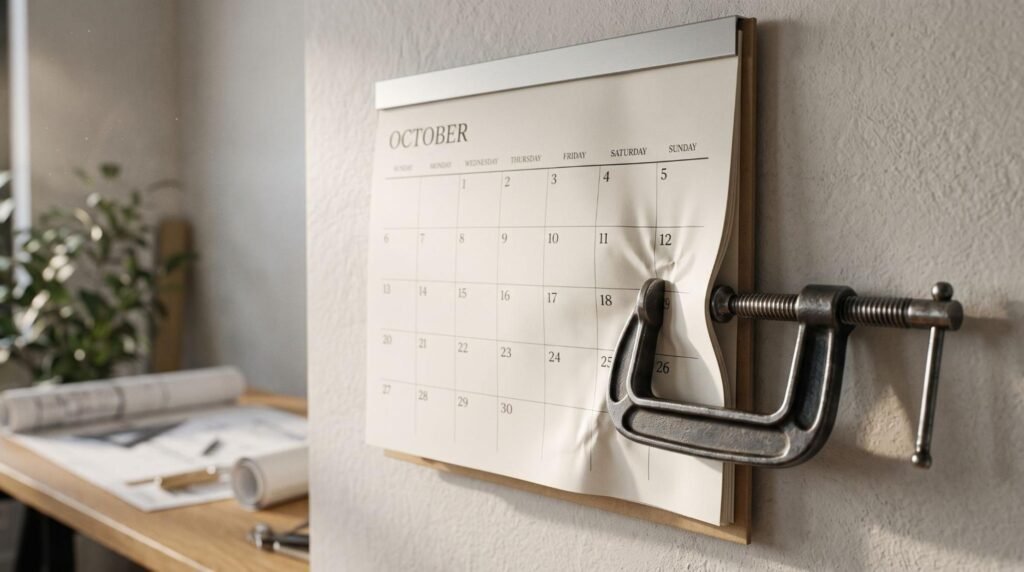
The ARPB meets on the fourth Thursday of every month at 8:30 in the morning.
That’s twelve opportunities a year. Miss a submission deadline, and you’ve lost four weeks. Get asked for revisions, and you’ve lost another month waiting for the next agenda. Two rounds of revisions on a Level 2 application can quietly consume a full quarter before a permit application is even eligible for review.
Buyers used to rolling plan review treat this as a scheduling detail. It isn’t. It’s the longest fixed-duration item in a Gulf Stream project, and it doesn’t compress no matter how motivated everyone is. Building your new home construction schedule around that calendar from the first week is the difference between a predictable timeline and a frustrating one.
Before planning anything, review the Town Code of Ordinances, including the Land Development Regulations and Design Manual. Both are available at Town Hall on Ocean Boulevard. The design manual is specific about architectural styles, materials, and roof treatments, and it goes considerably further than ordinary zoning. Designing first and reading it second is how projects end up in the discouraged-materials category.
The FEMA 50 Percent Rule Catches Almost Everyone
Here’s the one that turns renovations into rebuilds.
Under the National Flood Insurance Program, any improvement to a structure in a flood hazard area where the cost of the work equals or exceeds 50% of the building’s market value before the work begins is classified as a substantial improvement. Once that threshold is crossed, the entire structure has to be brought into compliance with current flood requirements including elevating the lowest floor to or above the base flood elevation.
Read that again if you’re buying an older coastal home. The rule doesn’t apply only to the portion you’re renovating. It applies to the whole building.
Gulf Stream’s housing stock includes a lot of mid-century construction sitting well below today’s base flood elevation in Florida. A buyer purchases a 1960s estate intending a kitchen, two baths, and a reconfigured living area. The work crosses the 50% line. Now the house has to be lifted or rebuilt, and the project is a different animal entirely.
Related: substantial damage works the same way. If a storm damages a structure to 50% or more of its pre-damage market value, the same compliance requirement kicks in whether or not you planned a renovation.
Much of coastal Palm Beach County sits in flood zone AE, where a base flood elevation has been determined and construction has to meet it. Anyone researching the cost to build a house in Florida on a waterfront parcel should settle their flood zone, their elevation requirement, and their 50% rule exposure before finalizing a design, not after. We work through this calculation early on every whole-home renovation we take on inside the flood zone, because the answer determines whether a renovation is even the right structure for the project.
Seaward of the Coastal Construction Control Line
Some Gulf Stream parcels sit east of the coastal construction control line in Florida, which the state uses to mark where storm surge and wave action during a major event are expected to reach.
Construction seaward of that line requires a separate permit from the Florida Department of Environmental Protection. It’s a state process running parallel to everything local, with its own standards for foundations, structural design, and dune protection. It doesn’t substitute for your town approvals. It stacks on top of them.
If your property fronts the Atlantic, confirm your relationship to that line during due diligence. Finding out afterward reorders your entire schedule.
What to Have Ready Before You Apply
Florida building permit requirements are strict statewide, and coastal Palm Beach County adds more on top. A complete Gulf Stream package generally includes:
Signed and sealed architectural drawings with elevations. A survey showing existing conditions and proposed improvements. A landscape plan, given how closely the town watches tree removal. Material samples and finish specifications for board review. Structural engineering meeting Florida building code requirements for wind load in this zone. Flood elevation documentation if you’re in a mapped flood area. Plus the signed Gulf Stream permit application page uploaded alongside everything else in the Highland Beach portal.
Incomplete submissions are the most common avoidable delay. Every missing document is another cycle, and in a once-monthly review calendar, a cycle is thirty days. If you’ve read our guide to Boca Raton building permits and code requirements, the documentation standard is comparable; the difference is Gulf Stream’s design review layer and the two-jurisdiction split.
Managing This From Out of State
Most Gulf Stream buyers aren’t living here when the work starts.
That’s workable, but it needs structure. Decide early who signs as owner and whether you’re granting authorization to your contractor. Confirm how your closing date interacts with the review calendar, because an owner who can’t legally sign until closing may miss a board cycle by days. Expect revision requests and build float into your schedule for them rather than treating approval as a single event.
The practical answer is a builder who holds the whole sequence design review, zoning, the Highland Beach portal, inspections as one accountable responsibility. Not a general contractor who starts when the permit lands.
Start the Conversation Before You Draw

The owners who move through Gulf Stream smoothly are the ones who understood the sequence before the architect started. Design review first. Permit second. Flood compliance determined before either.
If you’re buying in Gulf Stream, 33483, or anywhere along this stretch of coastal Palm Beach County, get in touch with our team, and we’ll map your approval path against the board calendar before you commit to a design.
For official filing requirements and current fee schedules, the Town of Gulf Stream permits page is the authoritative source.
FAQs
Who issues building permits in Gulf Stream, Florida?
The Town of Highland Beach issues them. Gulf Stream has an interlocal agreement with Highland Beach covering all building permits and inspection services, and applications go through the Highland Beach MGO portal under the Gulf Stream jurisdiction. Gulf Stream keeps full zoning authority over properties in town limits, so you’re satisfying two sets of requirements.
How long does the Gulf Stream permit process take?
The variable isn’t plan review; it’s design review. The Architectural Review and Planning Board meets on the fourth Thursday of every month, so each revision round costs roughly thirty days. Only after ARPB approval does a project become eligible for building permit review.
What is the FEMA 50 percent rule in Florida?
If improvements to a structure in a flood hazard area cost 50% or more of the building’s market value before work begins, it’s a substantial improvement, and the entire structure must meet current flood requirements, including base flood elevation. It applies to the whole building, not just the renovated portion, which is why it reshapes so many coastal projects.
Do I need ARPB approval for a renovation in Gulf Stream?
Often, yes. Expanding or demolishing more than 300 square feet, using architectural styles or materials the town discourages, or removing more than two trees over eight inches in caliper all trigger Level 2 review. Minor work affecting a small footprint can be handled at staff level.
Can I handle a Gulf Stream building permit from out of state?
Yes, with the right setup. Owner authorization, signing logistics, and your closing date all need to line up against the board calendar. Contact EG Homes Florida, and we’ll walk your specific property through the sequence before you commit to drawings.