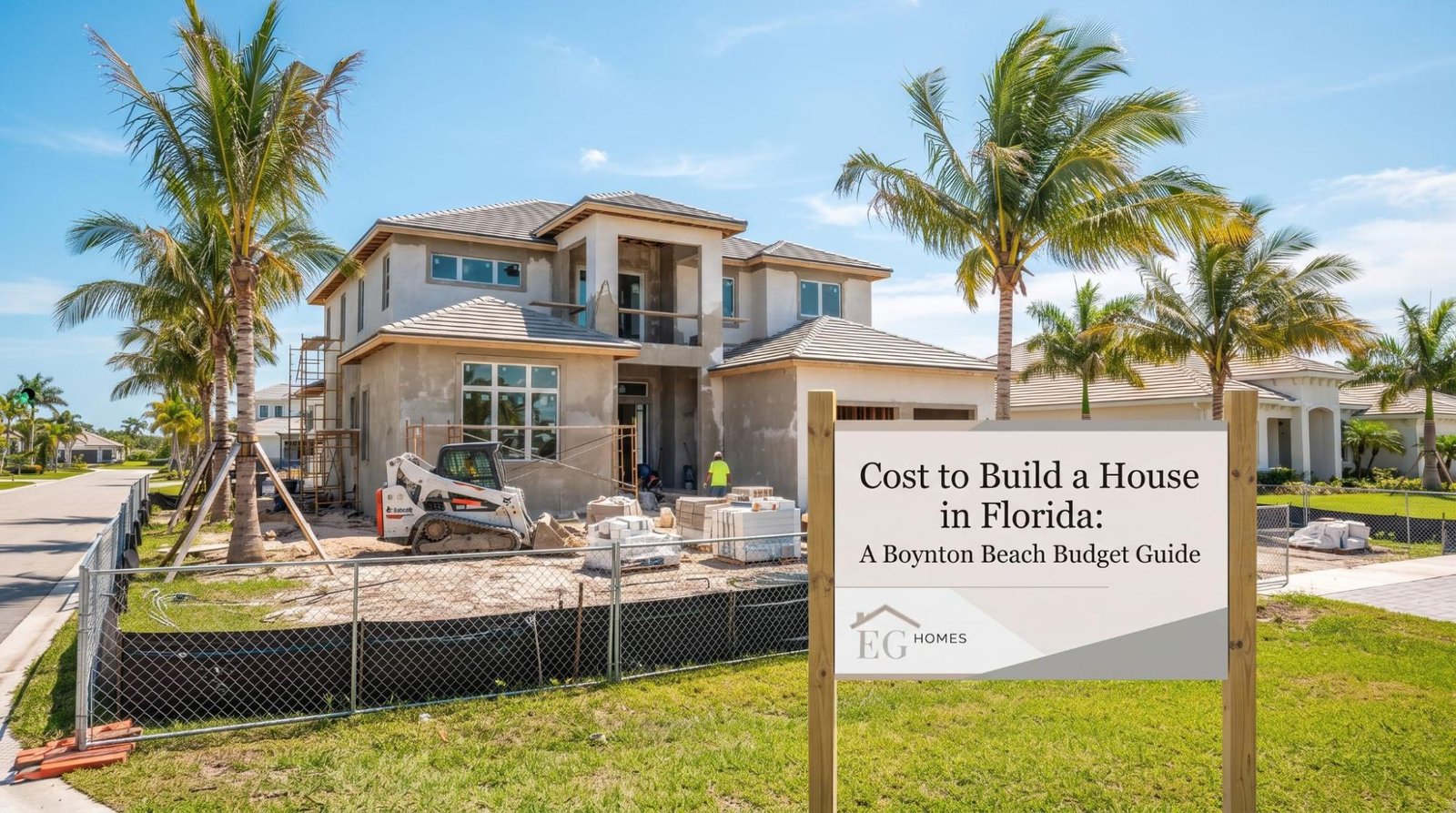
The cost to build a house in Florida is one of those numbers everyone wants, and almost nobody can give you a straight answer, because the honest answer depends on a dozen decisions you haven’t made yet. Ask five people who’ve gone through building a custom home in Boynton Beach what they paid, and you’ll hear five different totals, each one accurate for that specific lot, that specific spec sheet, and that specific year. What’s actually useful isn’t a single figure. It’s a map of where the money goes and when it leaves your account, so you can plan a build instead of guessing at one.
That’s the point of this guide. Not another per-square-foot headline, but a stage-by-stage look at what a Boynton Beach build costs actually, in the order you’ll pay for it.
Start With the Range, Then Adjust for Where You’re Building
Industry cost trackers put custom home construction across Florida somewhere between $280 and $400 per square foot for upgraded finishes, with production-style building running noticeably lower, often in the $125 to $150 range. Those figures come from statewide data, and statewide data blends everything from Panhandle tract homes to Palm Beach County waterfront builds. It’s not wrong; it’s just an average of very different projects.
Palm Beach County pulls toward the top of that range. Land costs more here. Labor is tighter. Insurance underwriting for coastal wind exposure adds real dollars to the shell. If you’re planning a genuinely custom build in Boynton Beach, treat the upper half of that statewide range as your starting point, not your ceiling; waterfront and Intracoastal-adjacent lots can run past it entirely.
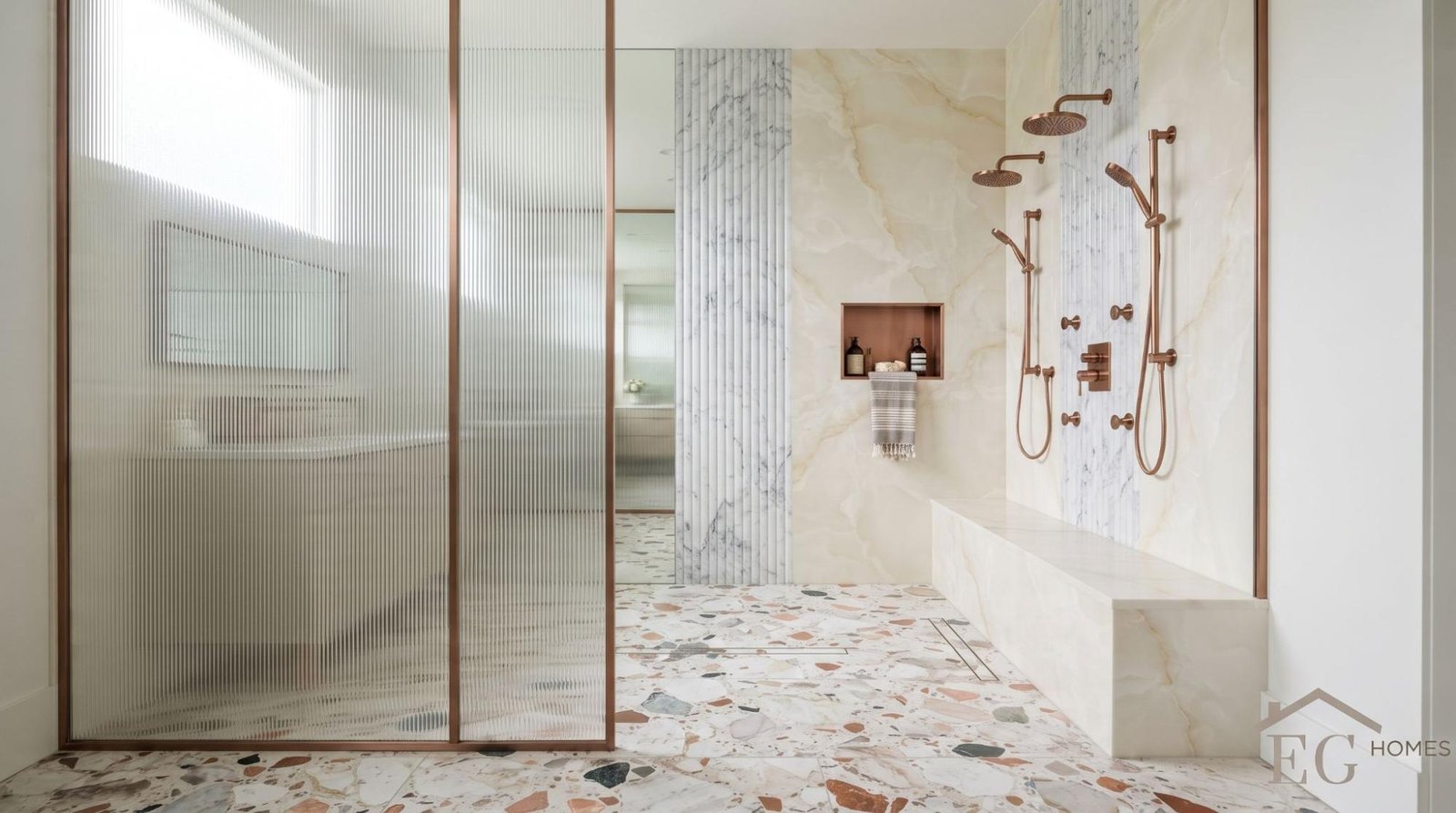
A few things move the number in ways that surprise first-time builders. Smaller homes often cost more per square foot, not less, because a 2,200-square-foot house still needs a full kitchen, a full electrical panel, and one complete permit set; those fixed costs just get spread across less area. Two-story designs typically beat single-story homes of the same total footage on a per-foot basis, since you’re splitting the cost of one foundation and one roof across double the living space. And finish selections move the whole-house number more than most people expect; the gap between contractor-grade and designer-level fixtures, cabinetry, and flooring can shift a budget by 25 to 35 percent on its own.
The Four Stages Where Your Money Actually Goes
Rather than list every possible line item, it helps to think in stages, because that’s the order the checks go out.
Stage one is land and pre-construction. Survey, soil testing, architectural plans, structural engineering, and, depending on the parcel, demolition of an existing structure. This stage can run 20 to 30 percent of total project cost before a single truss goes up, and it’s the stage most first-time builders underbudget.
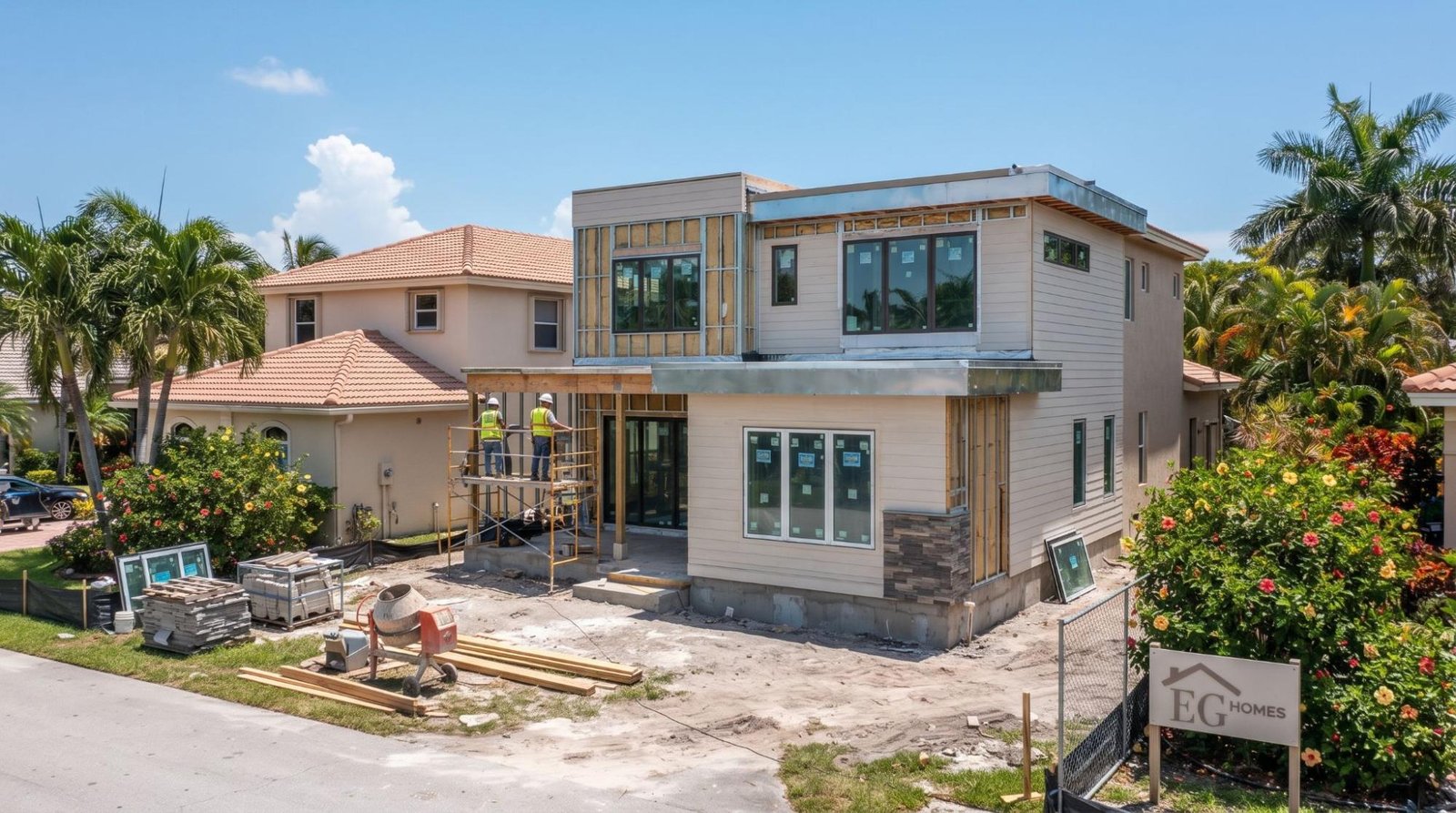
Stage two is the shell. Foundation, concrete block walls, framing, roof structure, and dry-in. This is where Florida Building Code requirements for wind-borne debris protection start showing up in the estimate; impact-rated openings and engineered connections aren’t optional line items in a coastal county; they’re baseline code.
Stage three is rough-in and systems. Electrical, plumbing, HVAC, and the permits that go with each trade. Boynton Beach calculates permit fees from declared job valuation, with separate sub-permits by trade, and Palm Beach County layers its own impact fees on top for roads, schools, and public safety infrastructure, often the largest non-construction line item on the whole job.
Stage four is finish-out. Cabinetry, flooring, fixtures, appliances, paint, and landscaping. This is your widest-swinging category, and the one where a homeowner has the most control over the final number, for better or worse.
Add a 10 to 15 percent contingency across the whole project. Not because a good home builder in Boynton Beach is bad at estimating, but because permitting timelines shift and concealed site conditions turn up on almost every real build.
Why Wind and Flood Rules Aren’t Optional Line Items

Palm Beach County sits outside Florida’s High-Velocity Hurricane Zone, which is specific to Miami-Dade and Broward, a distinction that trips up a lot of buyers who assume the whole southeast coast follows the same rules. But Boynton Beach is squarely inside the wind-borne debris region, and that means impact-rated glazing or approved shutter systems, a continuous engineered load path from roof to foundation, and product-approved assemblies on nearly every exterior component. Your structural engineer sets exact wind speed requirements per parcel and risk category; it’s not a number to estimate from memory or a neighbor’s permit.
Flood zone status matters just as much and varies block by block near the Intracoastal. A parcel that requires an elevated finished floor changes your foundation type, your fill quantity, and your long-term flood insurance premium. Pull the FEMA flood map for the specific lot before you assume a foundation type. The Florida Building Code publishes current wind and flood design requirements by jurisdiction if you want to check a parcel’s baseline before talking to an engineer.
The payoff for building to current code is real: homes that complete a wind mitigation inspection typically qualify for meaningful insurance credits that older housing stock simply can’t access, and that offset compounds over a long hold.
Build vs. Buy: A Quick Financial Test
Before locking in a building budget, it’s worth running the comparison against buying existing inventory, because new construction homes in Boynton Beach aren’t your only option. Buying an existing home is almost always cheaper upfront: no land risk, no permitting timeline, no change orders. Building wins over a longer hold, because you’re not absorbing deferred maintenance costs or an outdated electrical panel, and your insurance costs stay lower on a code-current structure.
The honest test: if resale inventory in your target neighborhood already matches how you actually want to live, buying is the cheaper path. If you’d spend two years and six figures renovating an existing house into something close to what you want, building was probably the better math all along.
What Actually Moves Your Bid and What Doesn’t
Some decisions shift a bid by a rounding error. Others shift it by tens of thousands of dollars.
Footprint complexity matters more than most people guess; every corner, bump-out, and roofline change adds labor and material, and a clean rectangular plan will almost always build cheaper than an articulated one of identical square footage. Roof complexity works the same way; multiple pitches and valleys cost more to frame and flash, and they create more long-term failure points. Glass area is its own budget line in a wind-borne debris zone, since impact-rated openings carry a real premium per square foot. And changes made after rough-in inspection cost multiples of what the same decision would have cost at the design table; that’s the single most common way a fixed budget turns into a strained one.
If you’re weighing a full rebuild against expanding your current footprint, our guide to home additions in Boynton Beach walks through the zoning and setback questions that shape that decision, which are different from the ones you’ll hit on a ground-up build.
Reading a Bid Without Getting Burned
The lowest number on paper is often the least complete number on paper. A few things worth checking before you sign anything: what a stated allowance actually buys (a $6 per square foot tile allowance and the tile you actually want to install are sometimes two different things), what’s explicitly excluded from the contract, whether you’re signing fixed-price or cost-plus, and whether the payment schedule tracks completed work rather than the calendar. A bid with no contingency line isn’t a cheaper bid. It’s a bid that’s deferred an honest conversation to later in the project.
Get a Number Built From Your Actual Lot, Not an Average

Every figure in this guide is a planning range, and planning ranges are useful right up until you own a specific parcel with a specific flood zone and a specific finish list. At that point, the only estimate worth budgeting against is one built from your survey, your selections, and a walk of the actual property.
EG Homes Florida handles design, permitting, and construction in-house for new builds across Boynton Beach, Delray Beach, and Boca Raton. If you have a lot under contract, or you’re comparing two sites and want to know which one actually builds cheaper, reach out to schedule a consultation, and we’ll walk the property with you before you commit to a number. Whoever you build with, confirm their license through the Florida Department of Business and Professional Regulation first; it takes a couple of minutes, and it’s the cheapest protection you’ll buy on the entire project.
5. FAQs
How much does it cost to build a house in Florida in 2026?
Industry estimates put custom home construction in Florida in the $280 to $400 per square foot range for upgraded finishes, with production-built homes running well below that. Palm Beach County tends toward the higher end of that range because of land, labor, and coastal code requirements. Your actual cost to build a house in Florida depends heavily on lot conditions, flood zone status, and finish level.
Is it cheaper to build or buy a house in Boynton Beach?
Buying existing inventory is typically cheaper upfront, since you skip land risk, permitting time, and change orders. Building tends to compete better over a longer hold, because a new home carries lower insurance costs and no deferred maintenance. The right call usually comes down to whether current listings actually match how you want to live.
How long does it take to build a new construction home in Boynton Beach?
Plan for roughly 12 to 18 months from design kickoff to certificate of occupancy on a custom build, with permit review adding variable time at the front end. Flood zone requirements, HOA architectural review, and mid-project change orders are the most common causes of schedule slip.
What fees do I need to budget for besides construction costs in Palm Beach County?
Beyond hard construction costs, budget for city permit fees, Palm Beach County impact fees covering roads, schools, and public safety, utility connection fees, and site work like fill and grading. Impact fees in particular are often the largest non-construction line item on a new single-family build.
How do I get an accurate cost estimate for new construction homes in Boynton Beach, FL?
Start with a builder who walks your specific lot before quoting, since flood zone, fill needs, and utility access all move the number in ways a listing photo won’t show. EG Homes Florida builds estimates from your actual survey and selections rather than a generic per-square-foot multiplier. Contact us to schedule a site consultation.