Plumbing and electrical work are critical stages in home construction because they create the essential systems that make a house functional. After the structural framing is completed, these internal systems are installed before interior walls are closed.
In South Florida, companies like EG Homes Florida (Delray Beach) ensure that plumbing and electrical installations meet strict building codes, safety standards, and climate-related requirements.
This guide explains the complete process step by step.
1. Rough-In Plumbing and Electrical Work Explained
The first stage is called “rough-in work.”
This means installing all plumbing pipes and electrical wiring inside the walls, floors, and ceilings before finishing materials are added.
Nothing is visible at this stage because everything is hidden within the structure.
2. House Plumbing Installation Process Step by Step
Plumbing installation follows a structured sequence:
- Water supply lines are installed
- Drainage pipes are laid out
- Bathroom and kitchen connections are prepared
- Pressure testing is done to check for leaks
This ensures clean water flow and proper waste drainage throughout the home.
3. Water Supply System in House Construction
The water supply system delivers clean water to all areas of the house.
Pipes are connected from the main supply line to kitchens, bathrooms, and laundry areas.
Proper installation ensures consistent water pressure and safe usage.
4. Drainage System Installation in Houses
The drainage system removes wastewater from the home.
It includes pipes that carry water from sinks, toilets, and showers to the main sewer line.
Proper slope and sealing are important to prevent blockages and leaks.
5. Electrical Wiring in New Home Construction
Electrical wiring is installed throughout the house to power lights, appliances, and outlets.
Wires are carefully placed inside walls and ceilings according to the home layout.
Safety standards are strictly followed to prevent electrical hazards.
6. Home Wiring System Installation Guide
The wiring system includes circuits for lighting, appliances, and power outlets.
Each circuit is planned to distribute electricity safely and efficiently across the home.
Proper labeling and routing help in future maintenance.
7. Electrical Panel Installation in Homes
The electrical panel is the central control point for electricity distribution.
It connects all circuits and protects the system from overloads using breakers.
A properly installed panel ensures a safe and stable power supply.
8. Concealed Wiring in Residential Buildings
Concealed wiring is installed inside walls and ceilings for a clean finish.
This method improves safety and gives the home a neat appearance without visible cables.
It is the standard practice in modern residential construction.
9. HVAC and Electrical Coordination in Houses
HVAC systems (heating, ventilation, and air conditioning) are coordinated with electrical work.
Proper planning ensures all systems work efficiently without interference.
This improves comfort and energy efficiency in the home.
10. Safety Standards for Home Electrical Work
Electrical work must follow strict safety codes.
This includes proper insulation, grounding, circuit protection, and load balancing.
Builders like EG Homes Florida ensure all installations meet local safety regulations.
11. Testing Plumbing and Electrical Systems Before Finishing
Before closing walls, all systems are tested.
Plumbing is checked for leaks and pressure issues, while electrical systems are tested for proper functionality.
Any issues are fixed before moving to the interior finishing stage.
Conclusion
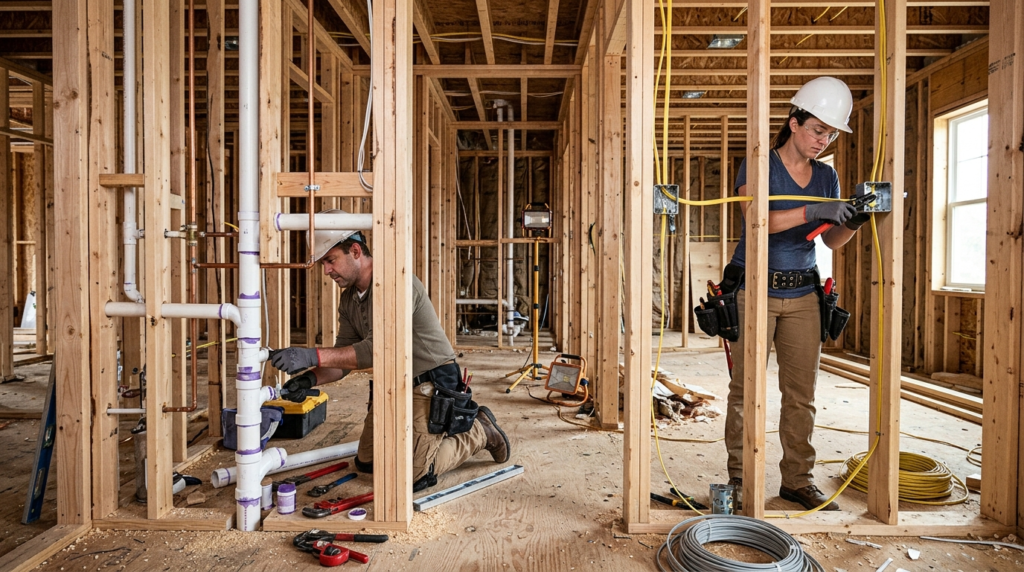
Plumbing and electrical work are essential hidden systems that make a home functional and safe. From rough-in installation to final testing, every step must be executed with precision. In South Florida, professional builders like EG Homes Florida (Delray Beach) ensure these systems meet high safety and quality standards before moving to the finishing stage.
Need a reliable contractor for your next project? Contact us now and book your free consultation.
FAQs
- What is rough-in plumbing and electrical work?
Rough-in work is the stage where plumbing pipes and electrical wiring are installed inside walls, floors, and ceilings before finishing materials are applied. - Why are plumbing and electrical systems installed before interior finishing?
They are installed first because they must be hidden inside the structure. Once walls are closed and finishing begins, access becomes difficult and costly. - What does the house plumbing system include?
The plumbing system includes water supply lines, drainage pipes, bathroom and kitchen connections, and waste disposal systems connected to the main sewer line. - What is an electrical panel, and why is it important?
The electrical panel distributes electricity to different circuits in the house. It also protects the system from overloads using circuit breakers for safety.
5. How are plumbing and electrical systems tested before finishing?
Plumbing is tested for leaks and water pressure, while electrical systems are checked for proper wiring, circuit functionality, and safety compliance before walls are closed.