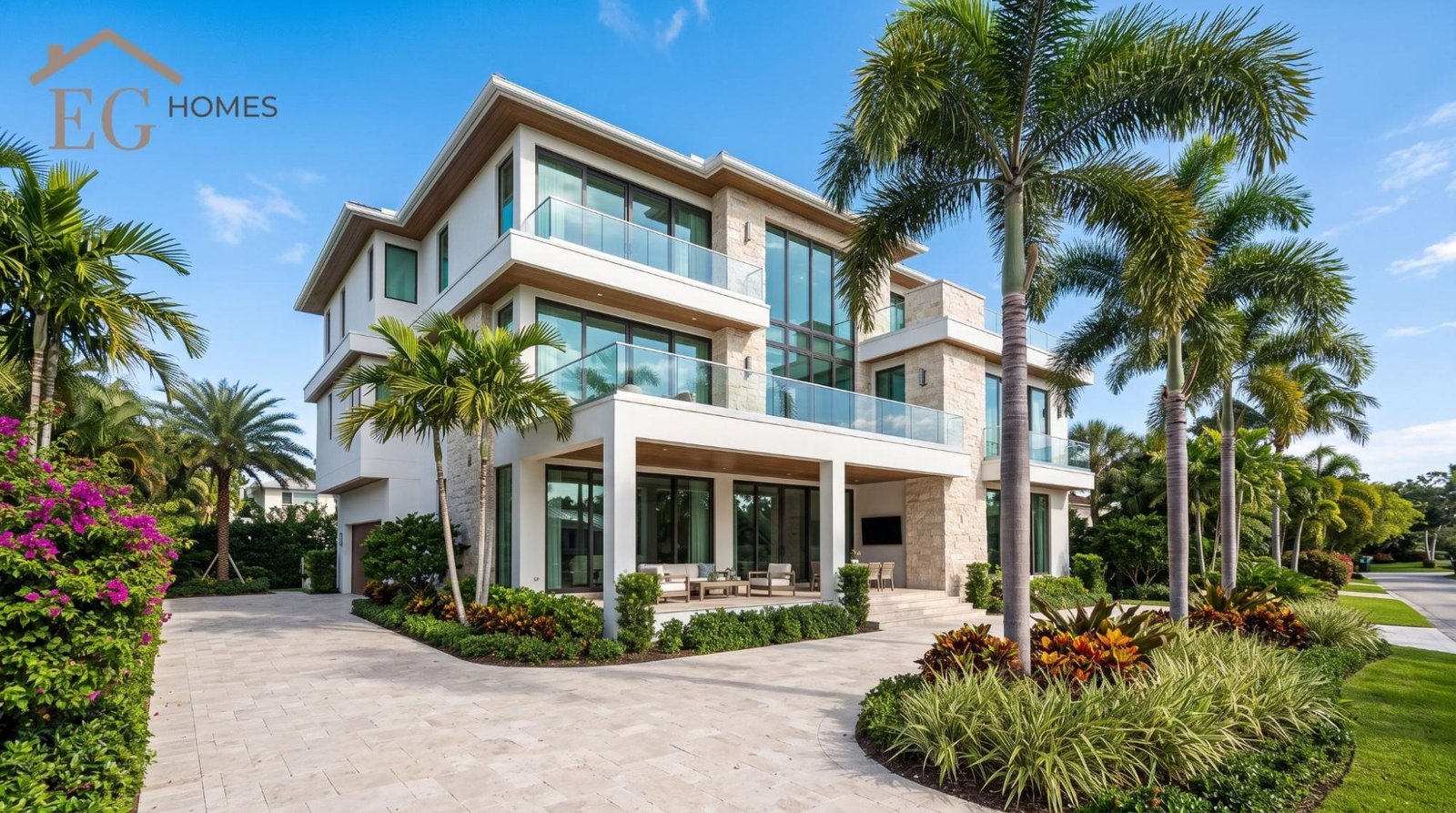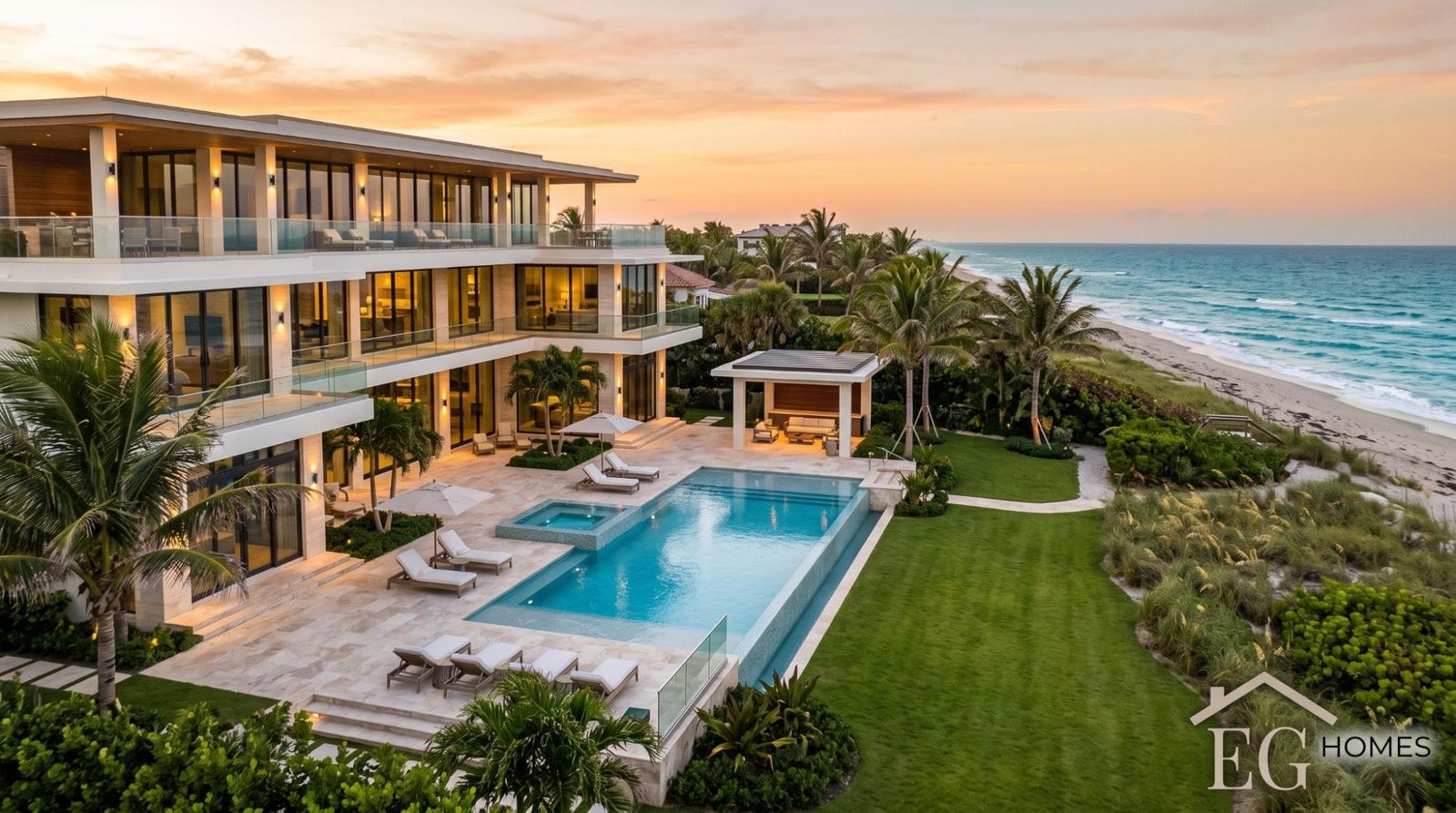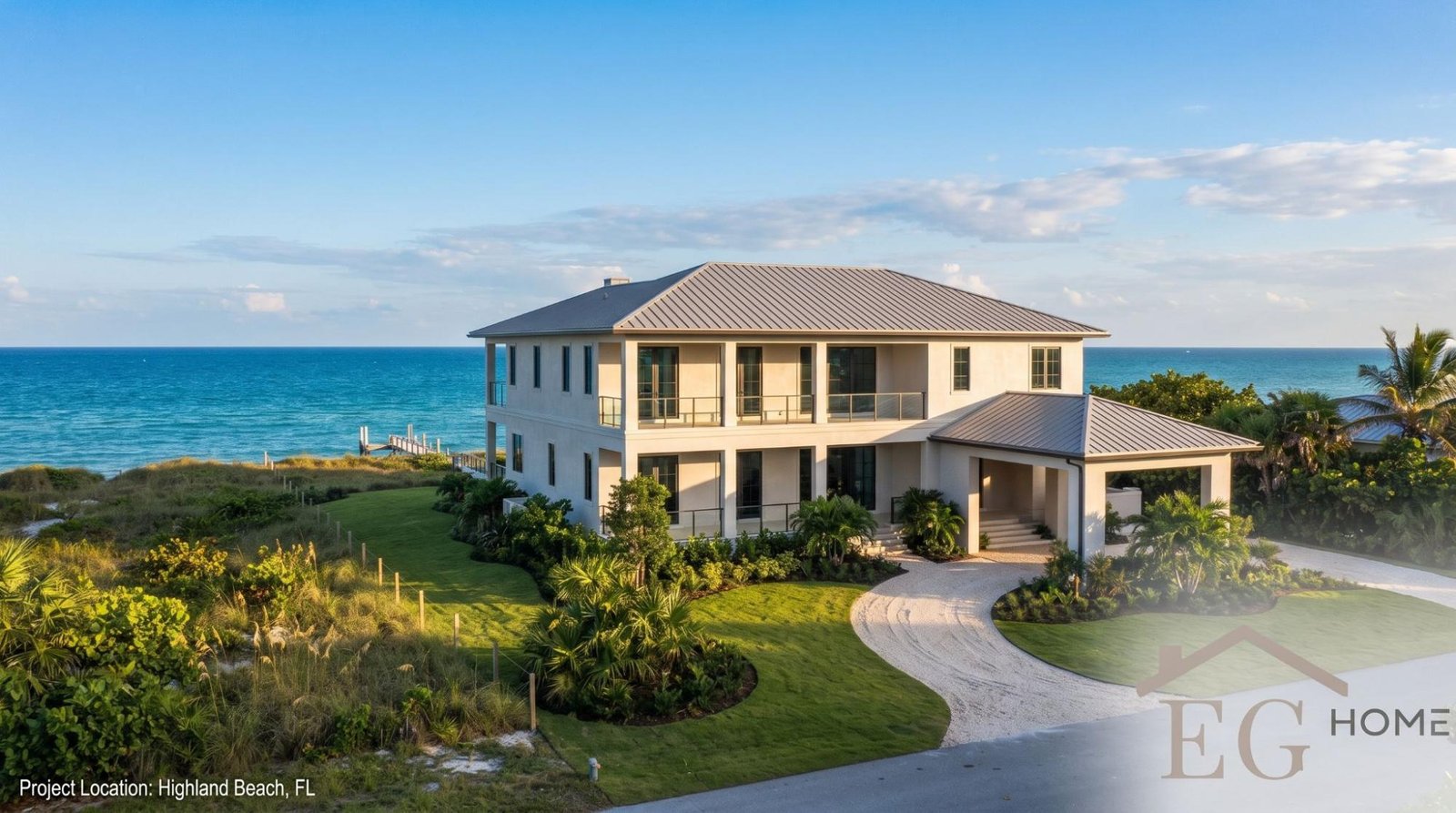
Highland Beach is 1.29 square miles, incorporated in 1949, sitting between the Atlantic and the Intracoastal in the 33487 zip code. Roughly 4,300 people live there. It’s small enough that plenty of contractors assume it works like Boca Raton, two miles south.
It doesn’t. The town has its own building department, zoning code, and amendments layered onto state code; owners who find that out mid-project lose weeks. Our Highland Beach construction team starts every job by confirming which rules actually apply to the parcel, because on this stretch of A1A the answer isn’t obvious.
Here’s what governs construction in the town, in plain language.
The Town Runs Its Own Building Department
This is the first thing to understand. Highland Beach isn’t permitted through Palm Beach County and isn’t permitted through Boca Raton. The Highland Beach Building Department reviews and issues permits for the town, and it also handles permitting for neighboring Gulf Stream through a separate portal.
Each municipality uses its own customer portal, and contractors have to register with MyGovernmentOnline before pulling new permits. A builder who works Delray and Boca full-time may not have an active registration for Highland Beach, which is a small administrative detail that quietly adds a week to a schedule.
The town’s zoning code is adopted under the authority granted by Article VIII, Section 1(f) of the Florida Constitution and the Florida Local Government Comprehensive Planning and Land Development Regulation Act. What matters practically: all construction within the town requires a building permit unless specifically exempted, and permits are issued by the building official or a designee.
Why a Palm Beach County Permit Lookup Won’t Find Your Project
Thousands of people every month run a Palm Beach County permit lookup, and for most of the county that works. For Highland Beach, it returns nothing.
County permitting systems cover unincorporated Palm Beach County and municipalities that contract with the county. Highland Beach does neither. Same for a general Palm Beach building permit search; you’re searching the wrong database. If you want your permit status, application history, or inspection record, you go through the town’s own customer portal.
Owners buying a resale on A1A get caught by this constantly. They search the county for permit history on a prior renovation, find nothing, and assume the work was unpermitted. Often it was permitted properly; it just lives in a system they haven’t looked in.
The Florida Building Code Applies, With Local Amendments on Top
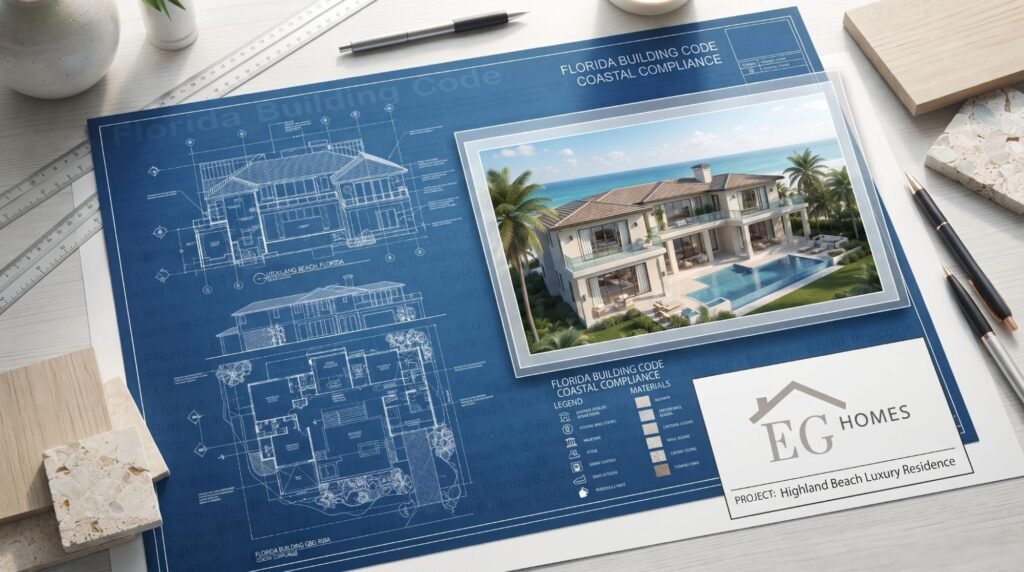
Highland Beach incorporates the Florida Building Code by reference as the town’s building code. That’s the same statewide code developed by the Florida Building Commission and required under Chapter 553, Florida Statutes.
The part people miss: the town has amended and supplemented Chapter 1 of the Florida Building Code through its own adopted Administrative Amendments, kept on file at the building department and available for public inspection. Those amendments have been updated repeatedly over the past decade through successive ordinances.
So “we build to Florida Building Code” is a necessary answer, not a sufficient one. The administrative layer is where local review procedure, submittal requirements, and inspection sequencing live. This applies to ground-up work and to renovations alike, which is worth knowing before you start a home remodel anywhere along the Palm Beach County coast.
One correction while we’re here, because it circulates constantly in South Florida: Palm Beach County is not in the High-Velocity Hurricane Zone. HVHZ provisions apply to Miami-Dade and Broward. Highland Beach sits in the wind-borne debris region, which carries its own opening protection and design pressure requirements, but it isn’t HVHZ.
The Ocean Setback Isn’t Set by the Town At All
This surprises almost every owner.
Highland Beach establishes dimensional requirements for lots, setbacks, height, width, length, and lot coverage in Table 30-2 of its zoning code. But the table’s own footnote defers the ocean setback to the Florida Department of Environmental Protection under coastal construction control line requirements.
The CCCL is a state-established line running along Florida’s coast. Building seaward of it requires state authorization in addition to your local permit. The line doesn’t follow the property boundary, it doesn’t follow the dune crest, and it isn’t visible on the ground. On a Highland Beach oceanfront parcel, where the CCCL falls can determine your buildable footprint more than any town rule does.
The zoning code also states that where applicable, the required rear setback is preempted by the setback established by the coastal construction line under state law. State jurisdiction wins.
Determining CCCL position is a survey and DEP question, not a guess, and it belongs at the very front of the schedule for any custom home built on the South Florida coast.
Height and the High-Rise Setback Formula
For the multifamily districts, the town uses a stepped setback that scales with building height.
Portions of a high-rise building under thirty feet comply with the standard front, side, and rear setbacks in Table 30-2. Portions thirty feet or taller must provide additional setback beyond that: one extra foot of setback for every two additional feet of height above twenty feet.
Height itself has a definitional quirk worth noting. Maximum building height doesn’t include permitted nonusable space below finished floor elevation, which matters on coastal parcels where elevated construction is required for flood compliance.
Anything outside Table 30-2 requires a variance, and variances go to the board of adjustment and appeals or the town commission. That’s a public process with a calendar, not an administrative approval.
How Long Is a Building Permit Good For in Florida? The Highland Beach Answer
Statewide code sets a baseline, but the town spells its own terms out clearly in § 30-122, and they’re stricter than most owners assume.
Every building permit expires six months after issuance unless work authorized by the permit begins within that window. A permit also expires if the work is suspended or abandoned for six months after it commenced. The building official may allow no more than two extensions, each capped at ninety days.
There’s a hard outer limit too. If the work isn’t substantially completed within two years of issuance, the permit expires and is cancelled by the building official, with written notice sent by certified mail. Work cannot proceed under the cancelled permit. Restarting means a new permit application plus any site plan or development review that applies to the site, though the town commission has discretion to waive additional permit fees.
For an owner sequencing a phased project, or holding a permit while finalizing design, those dates are the schedule.
Construction Hours, and the Saturday Rule Nobody Mentions
Section 12-6 of the town code restricts when work can happen.
Construction is prohibited on weekdays before 8:00 a.m. and after 6:00 p.m. On Saturdays, it’s prohibited before 9:00 a.m. and after 3:00 p.m. Sundays and listed holidays are off entirely.
The Saturday restriction goes further than the clock. Saturday construction activity cannot involve the use or operation of tools or equipment, in any fashion, that creates a noise disturbance across the property line of the permitted job site. In practice, that eliminates most meaningful Saturday production work in a town this dense.
Separately, condominium associations in the oceanfront towers often impose their own restrictions on top: board approval of plans, insurance naming the association, elevator scheduling, and in many buildings a seasonal blackout on renovation work. Those rules are private and independent of the town’s. The same coordination applies to a permitted home addition on the single-family side of the town.
Work With a Builder Who Knows the Town
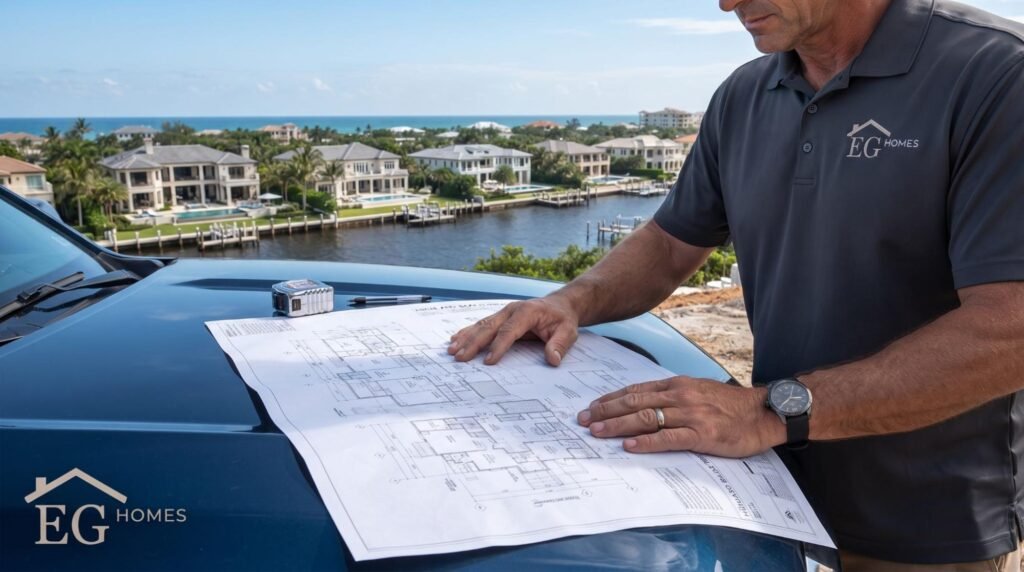
EG Homes Florida is a licensed, insured general contractor building across Palm Beach County: Highland Beach, Delray Beach, Boca Raton, Boynton Beach, Gulf Stream, Ocean Ridge, and Manalapan. We handle the permit application, the submittals, the inspection sequence, and the association package as part of the build, not as an afterthought billed separately.
If you own property in Highland Beach and you’re planning new construction, an addition, or a substantial renovation, the useful first step is a parcel-level review: zoning district, flood zone designation, CCCL position, and what the town’s current amendments require for your scope. Get in touch to schedule a consultation, and we’ll walk the property with you. For anything you want to verify independently, the Town of Highland Beach publishes its permitting information, customer portal access, and current requirements through the Highland Beach Building Department.
FAQs
How long is a building permit good for in Florida?
In Highland Beach, a building permit expires six months after issuance if work hasn’t begun, and also expires if work is suspended or abandoned for six months after starting. The building official can grant a maximum of two extensions of ninety days each. If the project isn’t substantially complete within two years of issuance, the permit is cancelled, and a new one is required.
Do Highland Beach permits appear in a Palm Beach County permit lookup?
No. Highland Beach operates its own building department and its own permitting portal, so a Palm Beach County permit lookup or Palm Beach building permit search won’t return town records. Permit status and history for Highland Beach properties are accessed through the town’s customer portal. This trips up buyers researching prior work on a resale.
What is the coastal construction control line in Florida?
The CCCL is a state-established line administered by the Florida Department of Environmental Protection that regulates construction seaward of it along the coast. Highland Beach’s zoning code defers the ocean setback to DEP under CCCL requirements rather than setting it locally. On an oceanfront parcel, the CCCL often determines your buildable area more than town setbacks do.
What are the construction hours in Highland Beach?
Work is prohibited on weekdays before 8:00 a.m. and after 6:00 p.m., on Saturdays before 9:00 a.m. and after 3:00 p.m., and on Sundays and listed holidays. On Saturdays, you also can’t use tools or equipment that create a noise disturbance across the job site’s property line. Condominium associations frequently add stricter rules of their own.
Can EG Homes Florida handle permitting for my Highland Beach project?
Yes. We’re a licensed general contractor working throughout Palm Beach County, and we manage the town building department permit application, plan submittals, inspections, and association approvals as part of the build. That includes confirming your flood zone and CCCL position before design is finalized. Contact us to schedule a consultation on your property.