The Florida hurricane building code is the set of wind, impact, and flood rules inside the Florida Building Code that every new home in the state must meet. For a South Florida build, it decides how your structure is engineered for wind, what glass and doors you can use, how your roof is attached, and how high your floor must sit in a flood zone. A new edition takes effect on December 31, 2026. If you’re planning custom new home construction, here’s what those rules mean in practice.
Table of contents
- Where the Florida hurricane building code came from
- How wind design works for your home
- HVHZ vs. the wind-borne debris region
- Roofs under the Florida hurricane building code
- Flood rules most buyers forget
- What changes on December 31, 2026
- Hurricane code requirements at a glance
- Frequently asked questions
- Your next step
Where the Florida Hurricane Building Code Came From
Before 1992, Florida let each city and county adopt and enforce its own code. Hurricane Andrew exposed how uneven that system was. The storm hit South Florida with 165 mph winds and caused record insurance losses, and investigators found weak standards and poor enforcement in many damaged homes.
The state’s response was a single statewide code. The first Florida Building Code took effect in 2002, replacing local codes with one standard based on the International Codes, with stronger hurricane provisions built in. It’s updated every three years.
It has held up. After Hurricane Michael in 2018, FEMA found that newer homes built to the code performed relatively well while most older homes nearby were destroyed. After Irma in 2017, FEMA reported that buildings designed to the code performed well structurally.
How Wind Design Works for Your Home
The code doesn’t hand every house the same wind number. Your engineer starts with the design wind speed for your exact site, taken from maps in the national wind standard the code adopts (ASCE 7-22). Then they adjust for how exposed the site is. A lot facing open water is treated more severely than one surrounded by other buildings and trees.
Those numbers become pressures on every part of the house: walls, roof, windows, doors, and the connections between them. The goal is a continuous load path, meaning the wind force on the roof is carried through the walls and into the foundation without a weak link. In practice, that shows up as straps, anchors, tie-downs, reinforced block walls, and engineered roof trusses that your inspector checks before they’re covered up.
For a coastal custom home, this is why your structural engineer’s drawings matter as much as the architect’s. Big openings, tall ceilings, and cantilevered balconies all need more engineering to meet the same wind pressures.
HVHZ vs. the Wind-Borne Debris Region
South Florida splits into two hurricane zones under the code, and the line runs along the Palm Beach County border.
The High-Velocity Hurricane Zone (HVHZ) covers Miami-Dade and Broward counties. It carries the strictest provisions in the code, including tougher product testing, and building products there typically need a Miami-Dade Notice of Acceptance (NOA).
The wind-borne debris region covers Palm Beach County and much of the rest of coastal Florida. Here, every glazed opening needs impact-rated glass or approved storm shutters, because flying debris is what breaks most windows in a hurricane. Once a window fails, wind pressurizes the inside of the house and can lift the roof from below.
If you’re building in Palm Beach County, your home isn’t in the HVHZ. That doesn’t make the rules soft. Coastal lots in towns like Highland Beach and Ocean Ridge face high wind exposure, and a custom home builder in Highland Beach or Ocean Ridge has to engineer for it.
Product Approvals: Why Your Window Has a Number
Windows, exterior doors, roofing, shutters, skylights, and similar products must carry an approval showing they’ve been tested to Florida’s requirements. Outside the HVHZ, that’s usually a Florida Product Approval. Inside it, a Miami-Dade NOA is the norm. Your inspector checks that each installed product matches its approval and is installed the way the approval says.
Roofs Under the Florida Hurricane Building Code
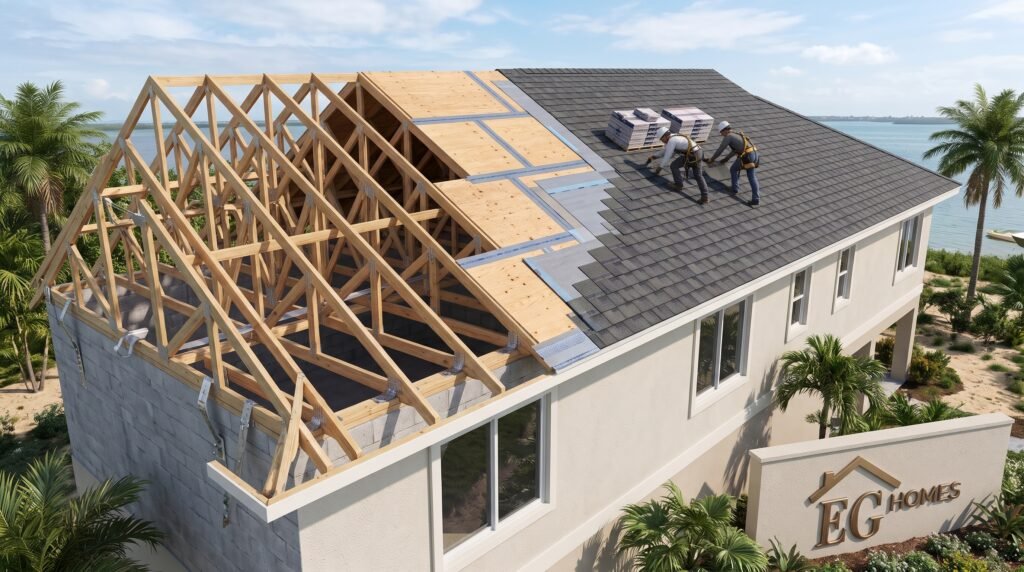
Roofs take the hardest hit in most storms, so the code is detailed about them: how the deck is fastened, which underlayment goes down, and how tiles, shingles, or metal panels are attached for your site’s wind pressure.
You may have heard of the 25 percent rule. It says that if 25 percent or more of a roof is repaired or replaced within 12 months, the whole roof must be brought up to the current code. Since 2022, state law exempts roofs that were built or replaced under the 2007 Florida Building Code or later. On a new custom home, your roof starts out fully compliant, which keeps future storm repairs simpler.
Flood Rules Most Buyers Forget
The hurricane code isn’t only about wind. In a flood zone, the Florida Building Code requires the lowest floor to sit at least one foot above the base flood elevation, or higher where the local design flood elevation demands it. In coastal high-hazard V zones and Coastal A zones, the rule applies to the bottom of the lowest structural member instead, which is why homes there usually sit on pilings or columns.
Space below that line can usually be used only for parking, storage, or access. Enclosed areas need flood openings that let water flow through, so the walls don’t fail under pressure. Check your lot’s flood zone on FEMA’s flood map before you finalize a design.
Planning a custom home in South Florida? Schedule a free consultation with EG Homes Florida to talk through your lot, your plans, and what the hurricane code will require.
What Changes on December 31, 2026
Florida’s 9th Edition Building Code takes effect statewide on December 31, 2026. In general, the edition in force when your permit application is submitted is the one you build to. So if you’re in design now, plan for the new edition.
For hurricane design, the update is more refinement than overhaul:
- Wind standard. The code keeps ASCE 7-22. Design wind speeds rose in the western Panhandle, but peninsula speeds, including South Florida’s, are unchanged.
- Roof design. Roof wind zones for common gable and hip roofs are simplified, and the code adds provisions for rooftop solar and roof pavers.
- Product approvals. Some products approved under the old edition may need fresh engineering against the new design pressures, so confirm your windows and roofing are approved for the 9th Edition.
One thing that didn’t change: a 2026 bill that would have required 160 mph impact-resistant building envelopes statewide died in committee. Our Boca Raton building codes guide covers how these rules play out on local permits.
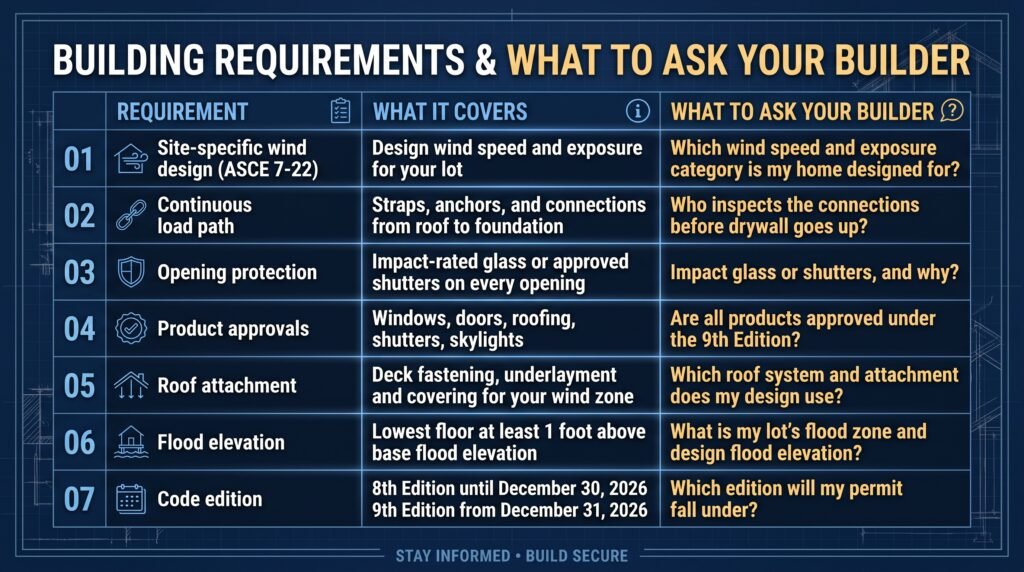
Hurricane Code Requirements at a Glance
Frequently Asked Questions
What is the Florida hurricane building code?
It’s the wind, impact, and flood provisions of the Florida Building Code that every new home in the state must meet.
Is Palm Beach County in the High-Velocity Hurricane Zone?
No. The HVHZ covers Miami-Dade and Broward. Palm Beach County is in the wind-borne debris region, so openings still need impact glass or shutters.
Do I need impact windows on a new home in South Florida?
You need impact-rated glass or approved storm shutters on every opening. Many custom homes use impact glass, so there are no shutters to put up before a storm.
What changes in the Florida hurricane building code in 2026?
The 9th Edition takes effect December 31, 2026. South Florida wind speeds are unchanged, but roof design rules and some product approvals are updated.
How do I make sure my new home meets the code?
Work with a licensed builder and engineer from day one. EG Homes Florida offers a free consultation to walk through your lot and what the code will require.
Your Next Step
These rules come from sources you can check. The International Code Council’s Florida Building Code story explains how the first statewide code took effect in 2002 after Hurricane Andrew. The Florida Division of Emergency Management’s flood provisions guidance confirms the code requires lowest floors at or above base flood elevation plus one foot. A Miami-Dade County permitting notice confirms the 9th Edition takes effect December 31, 2026. When you’re ready to plan your build, schedule a free consultation with EG Homes Florida to talk through your lot, your plans, and what the hurricane code will require.