Adding a second floor to house properties across Boca Raton has become one of the smartest moves homeowners make when their family outgrows the square footage, but nobody wants to give up the pool, the patio, or the mango tree out back. If you’ve been quietly measuring rooms and wondering whether a 2nd floor addition makes more sense than moving, you’re not alone. Lot sizes in older neighborhoods like Boca Square, Camino Gardens, and Old Floresta simply don’t leave much room to build outward, and the Boca Raton home builders at EG Homes hear the same question almost every week: can we just build up?
Why Boca Raton Homeowners Are Choosing to Build Up
Drive through any established neighborhood off Palmetto Park Road or south of Glades, and you’ll notice something. Homes are getting taller. The one-story ranch that dominated Boca construction from the 1960s through the early 90s is quietly disappearing, replaced by hybrid two-story designs that keep the original footprint but stack living space on top.
There’s a reason. The average Boca Raton lot in ZIP codes 33486 and 33432 runs somewhere between 7,500 and 10,000 square feet. Once you subtract setbacks, the pool, the screen enclosure, and mature landscaping, there’s almost nowhere to expand horizontally. Meanwhile, the family needs a fourth bedroom, a real home office, or a primary suite that isn’t the size of a walk-in closet.
Adding a second floor to the house solves this without touching the yard. You keep the coconut palms, you keep the pool deck, and you double your usable square footage. For families who love their neighborhood and don’t want to fight the current Boca resale market, it’s often the only sensible path.
Can You Add a Second Floor to a House Built on Concrete Block?
This is the first thing every homeowner asks, and it’s a fair question. Most Boca homes built before 2005 use CBS construction, meaning concrete block walls sitting on a slab foundation. The good news: CBS homes are generally excellent candidates for 2nd-story home additions because block walls carry vertical loads well. The catch is that a structural engineer has to verify it.
Every project starts with a structural assessment. Your engineer will look at:
- Existing wall thickness and rebar placement
- Slab foundation depth and soil conditions
- Whether the original footings were sized for a single-story load
- Interior load-bearing walls that could support new second-floor framing
Some homes need footing reinforcement or additional interior columns. Others need almost nothing beyond a tie-in system. You won’t know until an engineer pulls the original plans (often available through the Boca Raton Building Department’s ePlans portal) and does a site visit.
Adding a second level to a house built on pilings or with unusual foundation conditions gets more complicated, but even those situations have workable solutions. It’s rarely a hard no.
What Building Up Actually Looks Like
There are three common approaches for building 2nd floor space onto an existing Boca home, and choosing the right one shapes everything else about the project.
Full second story addition. You remove the existing roof and build a completely new second floor covering most or all of the original footprint. This gives you the most space and the cleanest architectural result. It’s also the most disruptive since the home essentially loses its roof for a few weeks during construction.
Partial second story. A smaller upper level, often just a primary suite or a couple of bedrooms, built over part of the house. Roof stays intact over the rest. Less expensive, less disruptive, but you end up with a mixed roofline that has to be designed carefully so it doesn’t look tacked on.
Pop-top or dormer addition. Adds usable space by raising a portion of the roof to create a functional half-story or loft area. Rare in Boca but occasionally the right call for homes with steep original rooflines.
For most families doing second-story house additions in Boca Raton, option one or two is the answer. Which one depends on budget, family needs, and how the existing home wants to be extended architecturally.
The Permit Reality in Boca Raton

Adding a second story to your house in Boca isn’t a weekend project. The city requires full architectural plans, structural engineering calculations, energy code compliance documentation, and often a survey update. Everything gets submitted through the Boca eHub and Boca ePlans portal.
Expect the permit review process to take anywhere from 8 to 16 weeks depending on plan completeness and current department backlog. If your property sits in flood zone AE (parts of east Boca near the Intracoastal), you’ll also need FEMA elevation compliance for the finished project. Homes west of I-95 typically face fewer flood restrictions but may deal with stricter HOA design review.
Wind load is the other big one. Boca sits just north of the High Velocity Hurricane Zone, but Florida Building Code still requires the new second floor and its windows to meet stringent wind pressure ratings. That means impact-rated windows and doors on the upper level are basically standard, and the roof-to-wall connections need engineered hurricane straps throughout.
None of this is a reason to avoid the project. It’s just a reason to work with someone who does this often. A general remodeler who mostly handles kitchens will drown in the paperwork.
The Cost Conversation Nobody Wants to Have
Second story additions in Boca Raton typically run $250 to $500 per square foot in 2026, sometimes higher for premium finishes or complicated structural conditions. A 1,000-square-foot addition, which usually gets you three bedrooms and two bathrooms, generally lands between $300,000 and $500,000.
That’s a real number, and it’s worth putting next to the alternative. A comparable Boca home with the extra bedrooms you need, in your same neighborhood, likely costs $200,000 to $400,000 more than what you’d get selling your current home. Add closing costs, moving, and the emotional toll of house hunting in a tight market, and the math on building up often wins.
What drives the cost:
- Structural reinforcement of the existing foundation and walls
- New engineered floor system to carry the second-story load
- Complete roof removal, reframing, and re-shingling
- Interior stairs (which eat 80 to 100 square feet from the first floor)
- HVAC redesign, since your existing system almost certainly can’t handle double the square footage
- Electrical panel upgrade, often necessary in homes built before 1995
- Impact windows for the entire second floor
Cheaper regions of the country see 2nd floor addition costs closer to $150 per square foot. South Florida runs higher because of code requirements, insurance-driven material standards, and skilled labor demand across home additions in Palm Beach County.
Living Through Construction
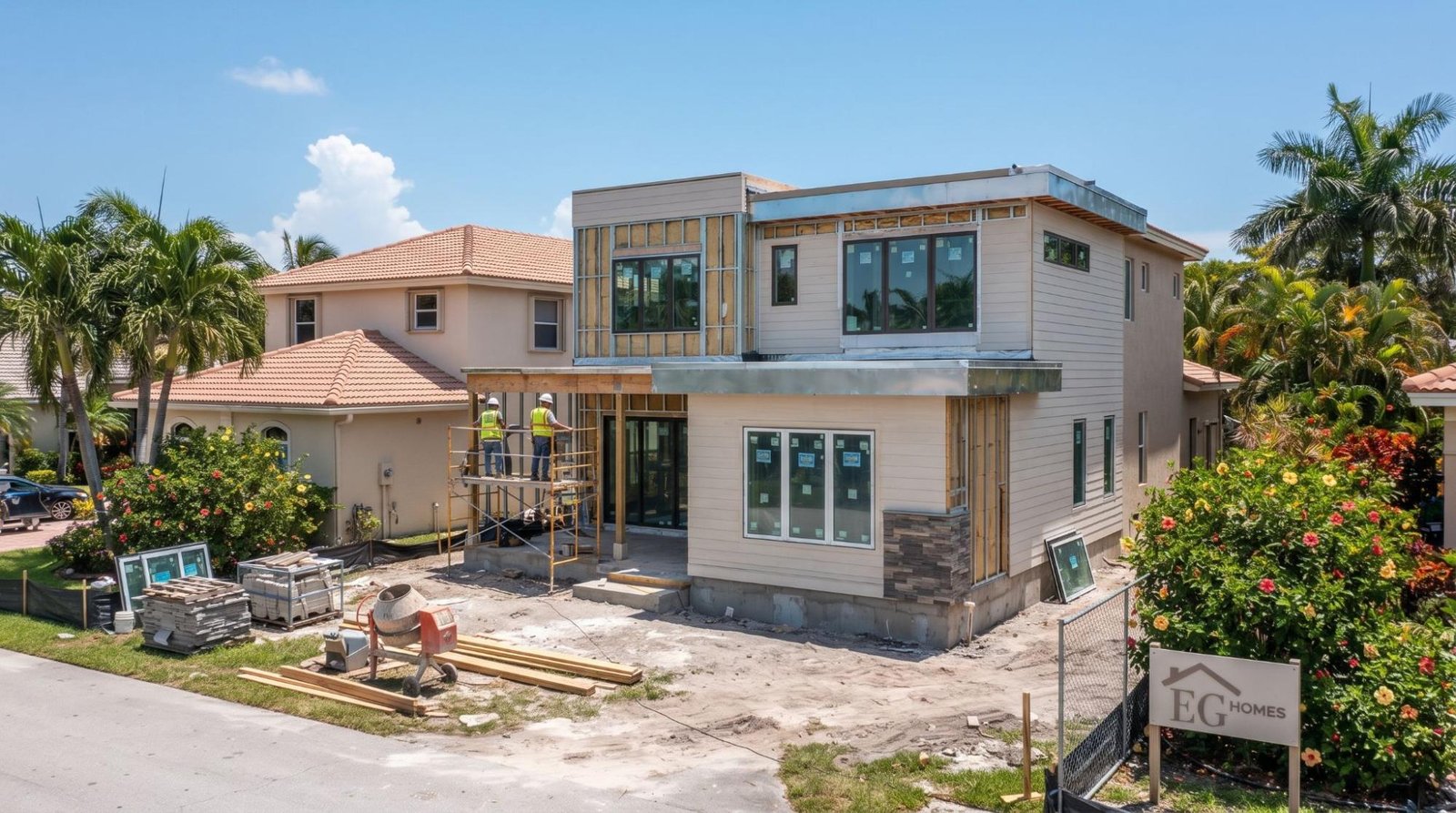
Full disclosure: this part isn’t fun. When the roof comes off your house for a full second story addition, you cannot live there. Plan on renting a furnished place for 4 to 8 weeks during the roofing and framing phase, then possibly returning while interior work finishes on the upper level.
Partial additions are sometimes livable throughout if the work zone can be isolated with temporary walls and a separate contractor entrance. Ask your builder for a phasing plan before you sign anything. A good builder will tell you honestly which weeks you need to be out and will work with you on timing around school schedules or work commitments.
Total project timelines usually run 8 to 14 months from first design meeting to final inspection. Design and permitting eat 3 to 5 months of that. Actual construction is typically 5 to 9 months depending on complexity.
Neighborhood Considerations Across Boca
Different pockets of Boca have different rules and different opportunities.
West Boca (33428, 33498): Larger lots, but many communities like Boca Bath & Tennis, Boca Isles, and the areas near Broken Sound have strict HOA architectural review. Second-story additions are often allowed but require design approval, and some communities restrict maximum building height.
Central Boca (33486, 33487): Older neighborhoods like Boca Square, Camino Gardens, and Old Floresta have smaller lots and no HOA restrictions in most cases. These are prime candidates for building up because there’s simply no room to build out.
East Boca (33432, 33431): Higher property values make additions financially attractive, but flood zone requirements and coastal wind exposure add complexity. Mizner Park and surrounding areas often require additional design review.
Northwest Boca near Yamato Road: Newer construction, larger lots, and communities that sometimes prohibit additions entirely. Check HOA docs first, or ask our Boca Raton team to review your community rules before you start planning.
Is Building Up Right for Your House?

Second-story home addition projects work best when the existing home has a strong foundation, a workable floor plan on the first level, and a lot that supports the increased impervious surface calculations. They work less well on homes with weak foundations, awkward first-floor layouts that can’t accommodate a stair, or historic structures that would lose their character.
The honest test: sit down with a contractor who does this regularly, walk through the house, and ask them to tell you what they’d change and what they wouldn’t. If the answer is mostly “this works,” you’re a good candidate. If they hesitate a lot, listen to the hesitation.
Ready to talk through whether a 2nd floor addition makes sense for your Boca home? Contact the EG Homes team for a walk-through and an honest assessment.
We’ll tell you if building up is the right call or if a different approach would serve you better. For broader context on how second-story projects perform financially, this Remodeling Magazine Cost vs. Value Report tracks return on investment for major additions across South Florida markets.
FAQ
Can you add a second floor to a house built on a concrete slab in Florida?
Yes, in most cases. CBS homes with slab foundations are common candidates for second-story additions across Boca Raton. A structural engineer must verify that the existing footings, walls, and slab can carry the new load, and reinforcement is sometimes required. Most Boca homes built after 1970 handle the addition well with modest structural upgrades.
How much does adding a second floor to a house cost in Boca Raton?
Expect $250 to $500 per square foot for a full second-story addition in 2026, meaning a 1,000-square-foot upper level typically runs $300,000 to $500,000. Costs vary based on foundation reinforcement, HVAC upgrades, impact windows, and finish level. Partial additions covering only part of the footprint cost less. You can see the full range of options on our home additions service page.
Is it cheaper to add a second story or build out?
Building out is usually cheaper per square foot because it avoids removing the roof and reinforcing the foundation. However, most Boca lots don’t have room to build out without sacrificing the yard, pool, or setback requirements. When lot size is the constraint, building up is often the only practical option even at higher cost.
How long does a 2nd floor addition take from start to finish?
Plan on 8 to 14 months total. Design and permitting take 3 to 5 months, and actual construction runs 5 to 9 months depending on complexity. Boca Raton permit review typically adds 8 to 16 weeks depending on department workload and plan quality.
How do I know if my Boca Raton home is a good candidate for a second story addition?
The fastest way is to have a builder who specializes in additions walk your property and review the original plans. They’ll assess the foundation, existing framing, first-floor layout for stair placement, and HOA or zoning restrictions in your neighborhood. Reach out to schedule a consultation and get an honest read on whether building up makes sense for your home.